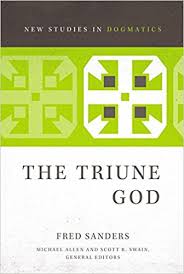
The Triune God by Fred Sanders

book triune god

Fred Sanders does a fine job explaining our Triune God in this volume that’s part of the New Studies in Dogmatics series published by Zondervan. You may have heard about this series being in the tradition of Berkouwer’s Studies in Dogmatics. It’s fair to label it a success as it excels in theological penetration and is at times dogmatic! Scholars have lined up to praise it and it’s easily one of the better volumes on the subject of the Trinity.

He doesn’t consume himself with the historical development of the doctrine but approaches the doctrine head on instead. That is, to my mind, a great approach. Many books drown in the history and make little contribution to actual understanding so this book will be more effective for most readers.

He begins with doxology which is the perfect approach for such a far-reaching doctrinal subject about our God. He describes trinitarian doctrine as “a doctrine about God, spoken in the presence of God, to the end of praising God.”

Next, he looks at the revelation of this doctrine. He probes deeply, interacts with other scholars, and explains “mystery”. The following chapter on the communicative mission of Each Person of the Trinity is key to his overall argument. There’s plenty of help here.

Chapters 4 and 5 look at the Incarnation and gets into procession within the Trinity. As you will see, there are plenty of ways to go off the rails here. Chapters 7 and 8 look at each Testament and its contribution to trinitarian doctrine separately. Chapter 9 is a wonderful summary of what we learned.

You will want at least two or three books in your library on the Trinity. Make this one of them!

I received this book free from the publisher. I was not required to write a positive review. The opinions I have expressed are my own. I am disclosing this in accordance with the Federal Trade Commission’s 16 CFR, Part 255.
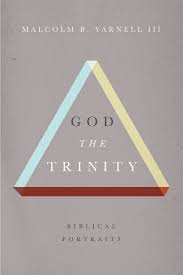
God the Trinity by Yarnell

book god trinity.jpg

This book takes a unique approach in presenting God the Trinity. There are several outstanding conservative volumes on the Trinity in print today, but Malcolm Yarnell gives us one that’s organized unlike any other. The conclusions found in this volume are conservative, baptistic, and supported by some of the finest theologians today.

On the downside, I had trouble following the logic of the flow of the presentation of the material. At times, it seemed random, conversational, and something of a flow of consciousness. Finally, I figured out that he was just addressing some of the most important biblical texts on the Trinity. All the arguments given showed scholarly depth and theological perception, it’s just at times they didn’t always seem the most persuasive tracks to prove the author’s point. In fairness to Mr. Yarnell, it could have been that I just didn’t personally connect with his design. Probably it’s best for you to check it out as it might be just what the doctor ordered for you.

The key Scriptures discussed are Matthew 28:19, 2 Corinthians 13:14, Deuteronomy 6:4-7, John 1:18, John 16:14-15, John 17:21-22, Ephesians 1:9-10 and Revelation 5:6. Without doubt, these are crucial texts in grasping what the Bible has to say about the Trinity.

The glowing recommendations that come with this book mean that despite my personal tastes about it, you will want to check it out if you’re trying to collect a study library for the Trinity.

I received this book free from the publisher. I was not required to write a positive review. The opinions I have expressed are my own. I am disclosing this in accordance with the Federal Trade Commission’s 16 CFR, Part 255.
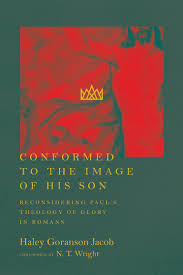
Conformed to the Image of His Son by Jacob

book con imAGE.jpg

I’m convinced we will be hearing about this book that probes what being “conformed to the image of His Son” means for many years to come. It’s clearly a scholarly work, but anyone who has an interest in theology will see that it projects itself as paradigm shifting. Whether you agree with all the conclusions found in this volume or not, you will almost without fail find yourself thinking some thoughts you’ve never thought before. Right off the bat, you will notice in the forward by N. T. Wright that even major scholars will wrestle with it and some may be convinced.

In the introduction, we are introduced to the author’s premise. The six common viewpoints on Romans 8:29b are set forth along with an explanation of why the author finds them wanting. There’s also a brief outline and an overview of what you will find in each section of the book.

Part one of the book redefines the meaning of “glory” as found in Romans 5-8. There’s a look at Jewish literature, further probing of usage in Romans, and an explanation of what participation in Christ’s glory means. For me, I was fairly well convinced of the conclusions found in these first chapters.

Part two digs deeper into the text of Romans 8:29. There are three chapters that look at what the image of the Son means, what participation in the firstborn Son’s glory entails, and why we are purposed for conformity to Jesus Christ. I was less convinced of the conclusions found here, though I’m not sure I fully made up my mind. In any event, there’s plenty here to think about.

The criticism that I might offer for this volume was that the author made it sound like every scholar had failed by carelessness in their dealings with this passage and phrase. Further, some of the previously offered explanations that can be found in print are not quite as threadbare as Jacob would have us believe. Maybe we can overlook these negatives by seeing them more as passion than censure.

I’ll recommend this book for its importance. If you love theology, you’ll want to see this book and decide for yourself.

I received this book free from the publisher. I was not required to write a positive review. The opinions I have expressed are my own. I am disclosing this in accordance with the Federal Trade Commission’s 16 CFR, Part 255.
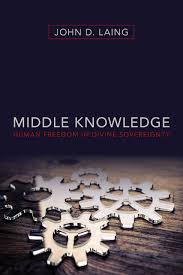
Middle Knowledge by John Laing

book mid know.jpg

John Laing makes a strong case for the concept of middle knowledge as an explanation of the providence of God. In doing so he upholds both human freedom and divine sovereignty. No doubt he writes in a highly divisive category among theologians and will probably get some pushback, but in my view has done well in writing a detailed, scholarly examination with careful biblical and logical accuracy.

Though he uses a lot of down-to-earth examples, this work will still be tough for newcomers to the debate. The logical analysis has not an ounce of fluff and so I suspect this work will be more appreciated by those with some theological background.

In a lengthy introduction he discusses what the doctrine of providence is, he examines the various models of providence, and he addresses the assumptions that are in play in arriving at a position. This information is extremely helpful in grasping the theological landscape. In chapter 1 he defines the doctrine of middle knowledge. He introduces the specialized vocabulary involved and shows several examples.

Chapter 2 is on the grounding objection, which he feels is the most important element in explaining middle knowledge. In chapter 3 he reviews the circularity objection before getting into the more debated chapter 4 on divine foreknowledge and free will. By chapter 5, he enters the most explosive battleground when he addresses predestination and salvation in regard to these theories.

Chapter 6 addresses the problem of evil and how it impacts each of these viewpoints. There’s a chapter on inerrancy and inspiration and its effect on this debate as well as one on science and theology. Since middle knowledge comes from Molinism, he addresses the biblical evidence for it in chapter 9. Chapters 10 is a conclusion upholding middle knowledge.

I can see myself referring to this book in the future any time the subject of providence in these debated areas comes up. I imagine the reader’s viewpoint may impact the rating of this work by reviewers more than the work itself. Again, it may be a little too strong for students due to the subject, but that’s not to say it’s written too opaquely. It’s the subject that’s tough. For me, it will likely be my go-to book on this lively subject.

I received this book free from the publisher. I was not required to write a positive review. The opinions I have expressed are my own. I am disclosing this in accordance with the Federal Trade Commission’s 16 CFR, Part 255.
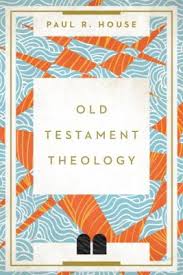
Old Testament Theology by Paul House

book ot th.jpg

This volume on Old Testament theology by Paul R. House has been so popular for 20 years that it has warranted this paperback edition. The Preface leaves no doubt about what you’re going to find in this book. First, you’ll find that its audience is for college students, though it has enough depth to be appreciated by scholars and teachers. Second, you will find an emphasis on historical context with a canonical approach. Most importantly, you will find that the author unapologetically holds to an evangelical outlook. Old Testament volumes available today particularly run toward a critical outlook. In a word, this book is refreshing.

The first chapter gives the history and methodology of the study of Old Testament theology. You will see that that history has run willy-nilly through many ditches over the last couple centuries. He ends that overview by mentioning some of the important conservative works that have finally come out. You might check out a conservative counterpart to this volume in Eugene Merrill’s Everlasting Dominion though neither of these important volumes renders the other obsolete.

I love how House approached the subject of Old Testament theology. For the most part, he takes the books of the Old Testament individually to see their contribution to the overall picture of Old Testament theology. For that reason, this book would be quite handy for its theological background if you’re doing a study on a particular book of the Old Testament.

This book is a winner. To my mind, it’s not out of date and is worthy of this new paperback edition. I know I’m glad to have it at hand.

I received this book free from the publisher. I was not required to write a positive review. The opinions I have expressed are my own. I am disclosing this in accordance with the Federal Trade Commission’s 16 CFR, Part 255.
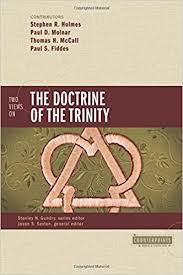
Two Views on the Doctrine of the Trinity: Counterpoints

book 2 views trin.jpg

Here’s a volume in the Zondervan’s popular Counterpoints series. Because a proponent of each view presented debates others of varying viewpoints, these volumes can be particularly effective. A single author often has trouble fairly presenting opposing views, but here every chapter is presented by someone who strongly believes in the position described. Knowing that others will debate every point keeps each contributor on his or her toes.

This book describes two views on the doctrine of the Trinity: classical Trinity and relational Trinity. Each of those viewpoints is divided yet again by two contributors who hold slightly different perspectives within the model. The only thing that strikes me as odd about this volume as compared to others of its type that I have seen is that the four contributors, Stephen R. Holmes, Paul D. Molnar, Thomas H. McCall, and Paul S. Fiddes, are not that far apart in what they believe. If you have not been deeply immersed in Trinitarian debate, the differences in these four contributors may almost seem like splitting hairs. Fortunately, there’s a lot to learn by working through their interactions.

The style is the same as the others in the series. First, a contributor presents his perspective, the other three contributors offer responses, and the original contributor gives a final rejoinder. It’s a quite fair method as every contributor gets to give the last word on his own perspective. The general editor, Jason S. Sexton, also gives a 10-page conclusion reflecting on what was presented. For the most part, this is just a nice summary. Additionally, there’s a glossary which can be quite helpful as this subject has a lot of specialized vocabulary.

Usually when I peruse one of these volumes I find myself gravitating most closely to one of the presenters, but in this case, I agreed with great portions of all four of them. That’s not to say that they don’t disagree on a few points, but they are an essential agreement about the importance and main facts of the Trinity.

Though it’s a little different than what I expected, I still found it to be an overall nice resource well worth consulting if you are tackling the doctrine of the Trinity.

I received this book free from the publisher. I was not required to write a positive review. The opinions I have expressed are my own. I am disclosing this in accordance with the Federal Trade Commission’s 16 CFR, Part 255.
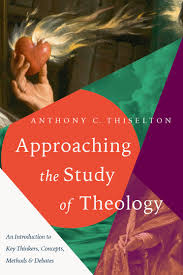
Approaching the Study of Theology by Thiselton

book app thro

Here’s a successful introduction to the study of theology by the revered scholar Anthony Thiselton. He has written major commentaries and highly-respected theological works including the companion volume Approaching Philosophy of Religion. With that body of work, Thiselton is the perfect candidate to write this type of overview to help students before they dive into larger theological tomes.

The Introduction introduces readers to the great categories of theology: the doctrine of God, humankind, human alienation from God, Jesus Christ: Redeemer, Savior and Lord, the Holy Spirit, and the church and sacraments. You might call them by different names, but these are the great categories of doctrine. Broad and brief, this section makes for a great review. The rest of the introduction is taken up with a history of theology from the church fathers through modern times. You might quibble over what’s left out versus what got in, but again it works as an introductory overview.

Part one discusses approaches to theology in nine categories. This will help students realize the many angles by which theology can be approached. Some are obvious like biblical theology, hermeneutical theology, historical theology, and systematic theology while others like political theology and theology of religions are not so well-known.

Part two looks at concepts and issues and shows us how fragmented the study of theology has become. It strikes me as along the lines of the good, the bad, and the ugly, but a student needs to understand these concepts that show up throughout the scholarly world.

The final part is a discussion of key terms in alphabetical order. This section is wonderful for browsing or reference. You might define certain words differently, but again, this section perfectly works as an overview for students.

Thiselton continues a prodigious output in his later years. You almost wonder if he’s reflecting on his career and writing to fill in where he feels there are gaps. In any event, he has succeeded in giving us a quite handy volume here.

I received this book free from the publisher. I was not required to write a positive review. The opinions I have expressed are my own. I am disclosing this in accordance with the Federal Trade Commission’s 16 CFR, Part 255.

The Beauty of the Lord by King

book beauty.jpg

This book by Jonathan King is part of Lexham Press’s Studies in Historical and Systematic Theology series. It’s the first volume in the series that I’ve encountered and I was impressed. It’s described as a “peer-reviewed series of contemporary monographs” that cover a wide array of subjects. This volume on the beauty of the Lord sheds light on so many places for me. The advertising blurb on the back cover (“restores aesthetics as not merely a valid lens for theological reflection, but an essential one”) doesn’t really capture what this book has to offer. It’s not so much a book about aesthetics as much it is one that exalts the beauty of the Lord as an overarching pedestal to understand the big picture of God’s word.

The book is well-written, deeply researched, and successful at probing what has been believed. The author never fears to cogently argue his case either. If you’re like me, you may find him easy to agree with whether it’s a topic you’ve deeply studied in the past or not.

The introduction is successful in establishing the goals of this book. By the end of it, there’s a good synopsis of every chapter. The chapter on beauty Triune is especially helpful if you are like me and have not spent a lot of time on the subject before. You will see how this subject ties into the doctrine of God, including His attributes, as well as its connection to the Trinity. I’ve been studying the Trinity lately and found some good information here.

The next chapter approaches creation as beauty’s debut. There’s more excellent theology here, particularly as the glory of the image of God in humans is discussed. The chapter on the incarnation sees it as beauty condescending. Just like its subject, this book is beautiful as it discusses the cross as beauty redeeming. Our salvation comes into view in the chapter on re-creation as beauty’s dénouement. The conclusion ties all these wonderful aspects together and proves the author’s thesis of the importance of the beauty of the Lord and give something of a systematic theology with palpable aesthetic value. There’s a lengthy bibliography as well if you want to look into further study.

There are some quality theological works being written these days and this book is one of them. Mark it down as a great success!

I received this book free from the publisher. I was not required to write a positive review. The opinions I have expressed are my own. I am disclosing this in accordance with the Federal Trade Commission’s 16 CFR, Part 255.
 

New Testament Christological Hymns by Matthew Gordley

book christ hymns.jpg

This book tackles a subject that I must admit is not one that I have delved into deeply in the past. There is no doubt that this subject is one that the author, Matthew E. Gordley, champions. New Testament Christological hymns are clearly his wheelhouse. This book both taught me and answered every question I had on the subject.

In the first chapter as the author describes the place of these hymns in the New Testament and in scholarship, he didn’t obscure the fact that not everyone agrees about what these New Testament hymns are. It boils down to a question of were these exalted passages that became the hymns of early Christians or were these early hymns that were incorporated into the scriptural text. The author makes a passionate case for the latter and that is apparently the prominent position in the scholarly world. Personally, I hold with the former and really see no evidence that could conclusively change my mind. My holding a different perspective than the author did not denude this book’s value for me.

Once we passed the chicken-or-the-egg argument, Gordley really illuminated what hymns are and the role they likely played with early Christians. What he shared there could likely be accepted no matter which viewpoint you held on these New Testament hymns overall. He stated in the book that he did not want this volume to only be a book of exegesis on those famous passages. He succeeded in sharing his thesis, giving insights on worship among early Christians, yet still provided helpful exegesis on these texts. Three chapters were given to cover the three most famous of these texts: Philippians 2:6-11, Colossians 1:15-20, and John 1:1-17. Because these are some of the most important passages on the doctrine of Jesus Christ they are worthy of the most intense study. There’s another chapter that studies a few other passages that are considered to possibly be a hymn.

The author writes well. He accepts some theories of redaction that I reject out of hand and a few other scholarly concessions that I wouldn’t care for, but he still delivers fine, important book here. If you are like me, you will be satisfied to have this one book as the one and only one on your shelves to address this subject. Scholarly and passionate, this book is a winner.

I received this book free from the publisher. I was not required to write a positive review. The opinions I have expressed are my own. I am disclosing this in accordance with the Federal Trade Commission’s 16 CFR, Part 255.

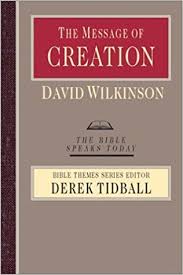
The Message of Creation (BST) by Wilkinson

book creation wilkinson.jpg

David Wilkinson, a writer of commentaries that I have enjoyed in the past, contributes this volume on the message of creation in the Bible Speaks Today (BST). Some of the same theological skill that I saw in those other volumes is present here. Still, his approach seems unusual, or at least not what I expected, and doesn’t address some of the more debated aspects in the discussion of creation. This is not the place to sift all the arguments, pro or con, for a literal creation. You will find that he always lands in the egalitarian position when male/female issues present themselves in the early chapters of Genesis as well. Beyond these caveats, he does bring in several angles that you might not have thought of.

The 20 chapters of this book, that cover 20 distinct passages, are divided into five sections. These sections include the beginning of creation (all passages are in early Genesis), the songs of creation (Proverbs and Psalms), the Lord of creation (all New Testament texts), the lessons of creation (from unexpected texts), and the fulfillment of creation (includes Revelation 21).  There’s an appendix that covers briefly some of the more expected issues. Throughout the volume, Mr. Wilkinson is not ugly to those who believe in seven-day creation but finds the viewpoint untenable.

Mr. Wilkinson is handy with a pen and a good communicator. Whether you agree with all his conclusions or not, you will receive some good food for thought. I could not recommend this book as the go-to volume on creation, but it’s a fine addition for a well-rounded library on the subject.

I received this book free from the publisher. I was not required to write a positive review. The opinions I have expressed are my own. I am disclosing this in accordance with the Federal Trade Commission’s 16 CFR, Part 255.