“In Christ” in Paul edited by Thate, Vanhoozer, and Campbell

book in christ in paul.jpg

This book is a substantial resource on the important doctrinal concepts of union and participation. As the title suggests, the expression “in Christ” is key in the Pauline writings and, perhaps, an important peg to hang New Testament studies on. When I saw the names Michael J. Thate, Kevin J. Vanhoozer, and Constantine R. Campbell listed as editors, I knew this would be a book of significant theological depth. Probably more important for the parts than its whole, this is a book that can be referred to for almost any issue imaginable touching on union and participation.

Vanhoozer himself provides a lengthy introductory article that serves as a grand overview of the subject. The rest of the articles are divided into three parts: Pauline theology and exegesis, some highlights from reception history, and theological reflection. I found the articles in parts one and three more interesting, but that probably has more to do with my tastes rather than any deficiency in part two. Most of the articles are narrow in scope. In other words, they slice off a small part of the overall discussion and examine it thoroughly. I imagine this book will be used more for reference than for being the textbook on the subject. On the other hand, I wouldn’t be shocked to see this work referenced repeatedly in future scholarly articles.

The first five articles by Douglas Campbell, Constantine Campbell, grant McCaskill, Susan Eastman, and Matthew Croasmun were most helpful overall. After that, you received help on baptism in relation to the subject, and the digging into 2 Corinthians, Galatians, Ephesians, and Philippians on participation. Part two sifts history to see what some of the theological giants thought about the subject before it received its more recent extensive coverage in the scholarly world. Irenaeus, Clement of Alexandria, Augustine, Martin Luther, Calvin, John Owen, and Karl Barth all received attention over these six chapters. Part three contained three articles that showed you how much this important theological concept can require new reflection in a variety of other parts of Scripture. Here we looked at going from the Trinity to Christian virtue, participating in the body and blood of Christ, and unity.

There’s no way that any scholar doing detailed work on union and participation will not have this work near at hand for decades to come. In addition, the rest of us can glean from its pages to draw out profound theological reflections.

I received this book free from the publisher. I was not required to write a positive review. The opinions I have expressed are my own. I am disclosing this in accordance with the Federal Trade Commission’s 16 CFR, Part 255.
Maturity by Sinclair Ferguson

book maturity

Over the past few years, I’ve made it a point to read new works by Sinclair Ferguson that come along. I’ve been blessed immensely and have greatly expanded my doctrinal understanding of many points. I don’t always agree with him, but he can’t be dismissed carelessly as he thinks deeply before pen ever touches paper. As it turns out, this work on maturity or growing up and going on in the Christian life is a revised volume of the work he wrote in his earlier days. It’s not as overtly doctrinal as other works of his that I’ve read, but the doctrinal underpinnings are obvious throughout. As the title suggests, it has a devotional flavor and is really geared to propel us forward in our Christian lives.

The book is simply set up. There are five subjects of growing up, standing firm, facing difficulties, pressing on, and maturity that gets anywhere from 1 to 4 chapters each. Some sections were more valuable to me than others, but that probably has more to do with needs in my life rather than a wavering quality of writing.

His first chapter throws down the gauntlet for why maturity is so critically important to Christians. A few paragraphs in and Ferguson refuses to allow us to think that there’s some magic formula to rush the process of maturity. As he says, it takes time and patient progress. There are several hindrances, which he outlines carefully, but the Bible also presents a process that will lead to maturity – a process that we should cooperate with. Later, he’ll talk about the key of abiding in Christ and what he calls full assurance. He tackles what guidance is as well.

In the next section, just as you would expect if you’re familiar with Ferguson’s writings, he outlines the problem of sin. From there he’s going to talk about handling temptation and fighting the enemy. In one of the best sections of the book, he talks about coping with suffering. In the section called “pressing on”, he explained serving faithfully and running patiently. He concludes with one chapter on maturity itself.

The book is well written. He marshals much Scripture, disperses much doctrine, and gives practical, balanced help. There’s none of the cheesiness of so many current titles on the market today. If you want realistic help, a help that understands that sanctification is a lifelong affair as is the maturity that springs from it, then this is the book for you.

I received this book free from the publisher. I was not required to write a positive review. The opinions I have expressed are my own. I am disclosing this in accordance with the Federal Trade Commission’s 16 CFR, Part 255.
Exalted Above the Heavens (NSBT) by Peter Orr

book exalted

The New Studies in Biblical Theology (NSBT) has had several outstanding releases over the last year or so, but this new volume by Peter C. Orr on the risen and ascended Christ is one of the best I’ve seen in some time. Its main strength is its ability to step inside nebulous, often-misunderstood subjects and really illuminate them for the reader. This book really helped me sew up some tears in my own thinking. The scholars will love it because he has an ability to give succinct overviews of where scholarly interaction on the subject has gone. On the other hand, those of us who are just jumping in to gather all the theology and biblical understanding we can receive will get it in spades!

After a brief introduction that explains what this book is all about, he jumps into the identity of the exalted Christ. He sensibly surveys what’s the same and what’s not the same between the exalted Christ and the earthly Jesus. Chapters 3, 4, and 6 were worth the price of the book alone for their expert guidance. The author really expanded my thinking about the relationship of the exalted Christ and the Holy Spirit. For that matter, his explanation of the church as a corporate identity of Christ was outstanding.

He looked at the location of Christ from several angles over several chapters. That discussion helps bridge the gap between biblical passages that talk about Christ at the Father’s right hand with those that speak of Him as with us here and now. Later, he went beyond location to talk about the activity of Christ both on earth and in heaven. There was a short, clear concluding chapter of reflections as well as a full bibliography and indices.

I see some things now that were muddy to me before. This is a fine book!

I received this book free from the publisher. I was not required to write a positive review. The opinions I have expressed are my own. I am disclosing this in accordance with the Federal Trade Commission’s 16 CFR, Part 255.
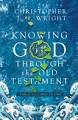
Knowing God Through the Old Testament by Christopher J. H. Wright

book know god

Having three titles by Christopher J. H. Wright between the covers of one attractive hardback is a treat indeed. I’ve found all his writings to be theologically perceptive, devotionally warm, and personally helpful. He reminds me much of his mentor, John Stott, only that the Old Testament is his specialty while Stott’s was the New Testament. That’s not to say that he mimics him in any way, just that he writes with that same spiritual penetration. The scholarship is always topnotch, but the spiritual concerns just rank a little higher—as of course they should.

These three titles deserve to be together. You can figure that out by the titles alone. Knowing God the Father Through the Old Testament, Knowing Jesus Through the Old Testament, and Knowing the Holy Spirit Through the Old Testament weave together perfectly to take the role of each member of the Trinity as revealed in the Old Testament in this compilation.

The book on Jesus was the first title written back before it became apparent that he would pen the trilogy. It has been popular enough to call for the second edition in 2014, which is the edition here. The latter two books were originally published by publishers other than IVP. This edition will the one you will want for all three titles.

Since I happened to be studying the doctrine of the Holy Spirit, I really dug into that title for this review. What the Old Testament has to say on the Spirit is somewhat more obscure than the later revelation of the New Testament and help is appreciated. Wright masterfully found the Spirit on the pages of the Old Testament in five chapters on the Creating Spirit, the Empowering Spirit, the Prophetic Spirit, the Anointing Spirit, and the Coming Spirit. He really helped me crystallize my thinking in places where I really needed the help. Glancing through the other two, I what the same clear thinking and good writing throughout.

This book is a treasure that you simply must have at hand. I love it and highly recommend it.

I received this book free from the publisher. I was not required to write a positive review. The opinions I have expressed are my own. I am disclosing this in accordance with the Federal Trade Commission’s 16 CFR, Part 255.
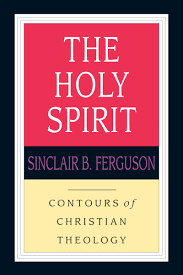
The Holy Spirit by Sinclair Ferguson

book hs ferg

There’s no doubt that Sinclair Ferguson is a savvy theological writer. There’s no doubt that the Contours of Christian Theology series by IVP is a theological heavyweight either. While I couldn’t exactly call this my favorite Ferguson title, it did dig deep as the series is known to do. Books in this series don’t merely regurgitate the main tenets of a doctrine but linger where it makes sense to look under stones where treasure might be found. I always reach for this series when I’m starting a detailed study of a particular doctrine.

Chapter 1 introduces the Holy Spirit in an effort to shorten the distance that stands between Him and most believers while explaining all kinds of theological perspectives. Chapter 2 looks at the Spirit of Christ by explaining “Paraclete” and scoping out the relationship between Christ and the Spirit. Chapter 3 looks at the gift of the Spirit by examining Pentecost. Chapter 4 tackles the ongoing aspects of Pentecost. Chapters 5 through 7 wades through the Spirit’s role in salvation. I felt the author bogged down in a pet subject here. His theological positions are well known, and whether you agree or not, perhaps some of this would have fit better in a different book. Chapter 8 looks at other issues involving the Spirit and salvation like first fruits and sealing. Chapter 9 reviews the relationship between the Spirit and the body before chapter 10 dives into the explosive territory of gifts. The final chapter on the “Cosmic Spirit” serves as a great conclusion.

Ferguson always stretches my mind. Whether I agree with him or not, I always find a warmness of one who loves Christ as he writes. There’s no way I’d study the Spirit and not see what he has to say.

I received this book free from the publisher. I was not required to write a positive review. The opinions I have expressed are my own. I am disclosing this in accordance with the Federal Trade Commission’s 16 CFR, Part 255.
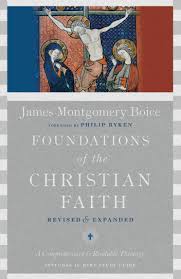
Foundations of the Christian Faith by Boice

bookfoundboice

Here’s a book that deserves to slide not only onto your shelves among your important systematic theologies, but also to be open on your desk. James Montgomery Boice was the quintessential pastor-scholar. In other words, there’s real scholarly depth in what he shares to go along with a full-orbed real-life outlook. I’ve used several of his volumes that cover books of the Bible to real profit. I’ve seen glowing recommendations in book review sources printed in the 1980s of the original four volumes that later turned into this volume as well as the current reviews that suggest the luster hasn’t faded as is often the case in many academic titles. It’s nice to finally get my own crack at it.

What, then, is my own opinion of its value? Strangely enough, I opened it first to the section on the Spirit of God because I had been doing some in-depth study on that doctrine. I noticed two things quickly: a) he had something to say that was worth wrestling with, and b) it was not a regurgitation of what I just recently read in the well-known systematic theologies I consulted.  As I looked further into the book, I then saw that the section on the Spirit wasn’t even the best one in the book!

The book is an attractive hardback that also now has a study guide. I don’t agree with every conclusion he arrives at, but this is a quality resource. Better still, for pastors, it will help you see how to take deep theological concepts and make them palpable to those in the pew without devolving into watered-down, calorie-free doctrine trying to pass itself off as a real theological meal.

I received this book free from the publisher. I was not required to write a positive review. The opinions I have expressed are my own. I am disclosing this in accordance with the Federal Trade Commission’s 16 CFR, Part 255.
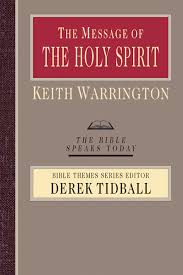
The Message of the Holy Spirit (BST) by Keith Warrington

book hs warr.jpg

The Holy Spirit is expertly drawn by Keith Warrington from all across Scripture in this helpful volume that’s part of the Bible Speaks Today (BST) series. I’ve used BST volumes on various books of the Bible for a long time but have really started loving these ones on Bible Themes. The design is simple but laudable: develop the doctrine directly from properly-exegeted texts. You probably have your systematic theology volumes at hand, but these books come from another angle and add something meaningful to your studies. I’ve not seen a loser among those I’ve perused.

After a bibliography and a brief Introduction, this book jumps in at Genesis and starts finding the Holy Spirit. The flow of argument follows the path the best works on the Holy Spirit do. We have two chapters on the Holy Spirit in the Old Testament. Next, the author lingers over the relationship of Jesus and the Holy Spirit in six chapters covering the Holy Spirit in the Gospels. In my estimation, this section carried the most bullion on its pages. Part Three, as you would expect, presents the Holy Spirit in the Book of Acts. The final seven chapters on the Holy Spirit in the Epistles covers many additional doctrinal subjects involving the Spirit such as gifts, the role in salvation, sealing, unity, and filling. You need not agree with every point made to glean from this careful walkthrough of the most important biblical passages on the subject.

I enjoyed this book, underlined many sentences, wrote the most important page numbers in the front to be able to return to them, and clarified many points along the way. What more could I ask for from this book well worth seeking out?

I received this book free from the publisher. I was not required to write a positive review. The opinions I have expressed are my own. I am disclosing this in accordance with the Federal Trade Commission’s 16 CFR, Part 255.
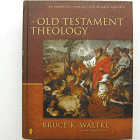
An Old Testament Theology by Waltke

book ot theo

That Bruce Waltke is revered in Old Testament scholarship is beyond dispute. His works on some OT books are the highest rated commentaries we have on them (particularly Proverbs and Micah). He’s written on most every section and genre of the OT and even contributed on Hebrew syntax. It comes as no surprise that Waltke would be chosen to deliver a comprehensive OT theology with those credentials. As he has done before, he even credits an associate who helped, in this case, Charles Yu, as a contributing author–but make no mistake—this is a Waltke work.

He gives 6 chapters of thorough explanation on what bible theology is as well as the importance of OT theology. By the time he’s done with this introduction, which compares to many a whole book on the market today, we are 170 pages deep.

Part Two covers chapters 7-28 and is labeled “Primary History”. It’s not just a chapter on every book or a combination of books of the Old Testament, yet every book that includes a historical element is covered. He lingers over the foundational Book of Genesis in covering the Cosmos, man, the Bride, the Fall, and the Noahic and Abrahamic Covenants. He follows a theological interpretation of Creation that doesn’t demand a literal creation, which is less than I would believe. Still, he was more conservative in places that I anticipated, and as works are graded these days, he would be labeled “conservative”.

Part Three covers chapters 29-35, is called “other writings” and addresses Wisdom Literature. As you probably know, that is one of Waltke’s specialties. The final 70 pages of this fine volume are made up of helpful indexes.

To my mind, this volume is one of the three most important OT Theologies on the market today. Because of the cruciality of OT Theology, and because of the three distinct approaches, I recommend having this Waltke volume along with Paul House and Eugene Merrill. If one is all you want, this book gives you the most material.

I received this book free from the publisher. I was not required to write a positive review. The opinions I have expressed are my own. I am disclosing this in accordance with the Federal Trade Commission’s 16 CFR, Part 255.
 

Here in Spirit by Jonathan Dodson

book here spirit

This book has a wonderful approach to the study of the Holy Spirit. Most such books run straight to controversy as if the Spirit was nothing more than an academic question or a “spirited” debate. The better ones remind us that the Spirit is a Person. This one by Jonathan Dodson goes one better by stressing that He desires relationship—a relationship that is not merely representative of the Father and the Son, but personal to Himself. The author went so far in that vein that repentance was required in his life for what was rank neglect of the Spirit on his part. Perhaps like me, you aren’t far behind him!

Dodson knows how to connect with this generation. I’m not sure the word “hip” is still in currency as I don’t have a hip bone in my body, but he knew how to pull in a great deal of popular culture. For the record, I don’t think I had ever seen even one movie he referenced, but he told enough of the plot that I could connect the dots easily. What won the day for me was his prevalent sincerity and contributive content.

He didn’t drown in tongues, or gifts, or other strange favorites, but he displayed a clear understanding that preferred to stay on task for a relationship with the Spirit. My strongest recommendation for this book is the positive conviction it brought to me. In short, I prayed differently this morning. In a book aimed at Christians at all points of our journey, what could be a better endorsement?

I received this book free from the publisher. I was not required to write a positive review. The opinions I have expressed are my own. I am disclosing this in accordance with the Federal Trade Commission’s 16 CFR, Part 255.

Modern Technology and the Human Future: A Christian Appraisal

book mod tech.jpg

We must have discussions like this one. A couple of decades pass and our very world has changed with smartphones and other electronic devices. It has affected Christians along with everyone else. We are finally pausing to search out the implications of this seismic shift. Several practical Christian books have probed how we might deal with a world that has changed and is not going back. (One by Tony Reinke lies on my desk). In this volume by Craig Gay, however, the broader theological implications are mined. This book is less of how you ought to alter your life in the days to come and more of what does it even mean. Both types of books are needed and I’m rooting for their success.

The author writes with balance. He neither denies his own use of the technology he writes about nor encourages its complete rejection. In fact, his analysis seems to embrace its good at least to the extent of sharing the Gospel and other wholesome features while exercising caution on the other end. Our society has changed. To what extent should a Christian change with it?

To bulk up his premise, the author surveys other paradigm-shifting technological advances from the plow to automated manufacturing. He traces how economic concerns are usually the driving force. He turns his discussion toward theology by considering “ordinary embodied human existence” with the background of the Incarnation of Christ and God’s mission for us.

The book is deep reading. If you find that kind of theological reading difficult, this book will be a challenge. Theological junkies will find it the perfect discussion of an all-encompassing subject. If you can handle academic reading, and enjoy well thought out analysis, this is the book for you.

I received this book free from the publisher. I was not required to write a positive review. The opinions I have expressed are my own. I am disclosing this in accordance with the Federal Trade Commission’s 16 CFR, Part 255.