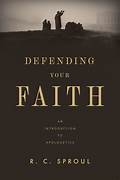
Defending Your Faith by R.C. Sproul

It’s subtitled “an Introduction to Apologetics”. After reading it, I’m prepared to recommend it as a starting place without reservation. Its writing is clear even if its concepts are deep. In other words, you might struggle a bit if it’s your first encounter with this material, but you’ll go farther in understanding than in many books three times its length. Sproul, with his philosophy background, is at his best here. I actually prefer him here over theological subjects though his brilliance is undeniable.

The first section of two chapters makes a biblical case for apologetics. He briefly explains historical reasons for the development of apologetics and then outlines its task. He further discusses the quandary of defense versus evangelism, which he defines as proof and persuasion. The bulk of the book, he says, is to defend the existence of God and the authority of the Bible. He also makes a good case against those who criticize apologetics. 

The next section of six chapters, which are the best of the book, cover the four principles of knowledge. If you are not familiar with this subject, you would never guess these four principles, but as you read, you are easily convinced of how essential they are. I am amazed by both the depth and the quantity of learning you receive in 40 pages here. It is laid out so flawlessly. He takes you step-by-step on a journey and convinces you every step of the way. I almost think that describing it would be like giving spoilers, and I figure you’d be better off to just enjoy it. I would further believe that if you mastered these 40 pages, you would be a long way down the road of understanding apologetics.

The next section of two chapters about natural reason and faith are really just overcoming the attacks against those four principles that have developed. These attacks fall to the ground like a stray bullet that hits nothing.

The following two sections really are about how we weather the later philosophical storms against belief in the existence of God. For example, some admit that there must be a higher being, but then try to negate His influence today. Others try radical ideas like saying God is an illusion, or that all that exists is self created, which Sproul explains is nonsense, or creation by chance which is pretty much the same thing, or the universe is God. He at length shows that only our God as a self-existent being explains reality. He then exposes the rogue philosophers who level these attacks.

The final section of the book is a robust defense in four chapters on the authority and trustworthiness of the Bible. Good stuff.

Sometimes you read a book that is fantastic and you lay it aside. Other times you read a great book and you know you will refer to it again and again. That is where I find myself on this book.

I received this book free from the publisher. I was not required to write a positive review. The opinions I have expressed are my own. I am disclosing this in accordance with the Federal Trade Commission’s 16 CFR, Part 255.
The Beginning of the World by Henry Morris

Some years ago, I read a few works by Henry Morris and always had warm feelings about them. He wrote on Creationism and Christianity, sometimes even commentating on books of Scripture. His forte was clearly laying science before Scripture. He always showed evidence of being studied and had no doubts of the validly of Scripture. Not really an exegete, so devotional is really the space he works in.

I’m excited to see the reprinting of several of his titles in a new series called The Henry Morris Signature Collection. They have a crisp look and are a good mixture of the familiar and the new. One of the titles that was new to me was this one that digs deep into the scientific aspects of the first 11 chapters of Genesis.

Obviously, this portion of Scripture is the battlefield of the war between Creation and Genesis. I’m amazed at what simple arguments he presents that absolutely obliterates evolution. For example, the two Laws of Thermodynamics as he well explains are simply insurmountable for evolution. Once after an incredible list he says, “The vaunted evidences of evolution are actually quite trivial”. Ouch! But after reading what went before you are thoroughly compelled to feel the same way.

This book will be helpful for a wide spectrum of users. Pastors and teachers will enjoy it beside a regular commentary to see the science boldly confronted in the text. Bible students, and even younger ones, can still follow the presentation and learn so much.

When you read this book you will wonder how it could possibly be such a minority position with both the Bible and science so clearly on its side. Warmly recommended.

I received this book free from the publisher. I was not required to write a positive review. The opinions I have expressed are my own. I am disclosing this in accordance with the Federal Trade Commission’s 16 CFR, Part 255.
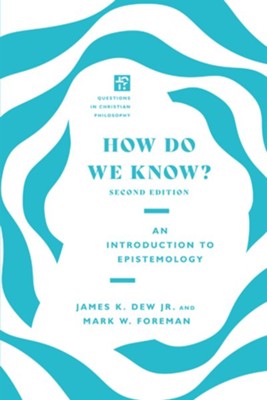
How Do We Know? by Dew and Foreman

Here’s another volume in the “Questions in Christian philosophy” series that distills what I imagine would be a semester-long class. I enjoyed the earlier one on Logic especially, and found this one on epistemology helpful too. Though I read theological works regularly, this material is new to me. The subject itself, not the author’s writing, can be challenging. At times philosophy has split the hair too finely on what it is to “know”, and yet how powerful is the thought that we can “know” something.

As for the book itself, it’s clearly written. Often the examples are catchy and effective to make the idea clear. I imagine Dew and Foreman would be engaging teachers. The only problem I had with the book is that too often they wouldn’t pick a side. They never failed to give you the strengths and weaknesses of every viewpoint, but it almost seemed like they never champion any one of them. They never really forged their own new way forward either. Since this was newer material for me, perhaps I wanted that feature more than usual. Especially I wanted to know how a Christian ought to think as so many of the philosophers were not Christian. I am not saying they didn’t give information that you could dig out, perhaps, and find your own opinion. But that design would be better for those who are well-versed on the subject. I hope my one criticism of the book is not actually more one of my own self than of the authors, but I’ll leave that to your judgment.

Still, when I have a question on epistemology, I’ll be reaching for this book.

I received this book free from the publisher. I was not required to write a positive review. The opinions I have expressed are my own. I am disclosing this in accordance with the Federal Trade Commission’s 16 CFR, Part 255.
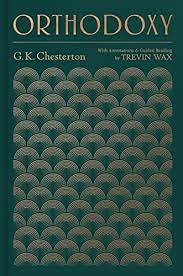
Orthodoxy by Chesterton–A Beautiful New Edition

Chesterton needs no recommendation from me. He’s never lacked an audience since his writings appeared decades ago. On the other hand, perhaps I could share something with those like me who had never gotten around to taking a dip into the unique world of Chesterton. Like it did for me, this new annotated edition presents you the perfect opportunity.

First, there’s Chesterton. I found him as fresh as any author today. You might call him idiosyncratic as he is refreshingly distinctive and even peculiar as any I’ve read. He sees things you don’t and when he pulls them out and lays them before you all you can think is why hadn’t you always known it. He has one of the best senses of humor I’ve ever encountered. Not in the sense of a comedian, but one in a successful effort at clarity who causes you to laugh out loud. He couldn’t be boring if he tried, but it appears he never tries.

Second, there’s his “Orthodoxy”. He approaches orthodoxy or apologetics in a whole new vein. Rather than following the template of most all apologetic works, he more shares the lofty journey that took place in his own mind. He takes the most common criticisms of our faith and turns them on their heads. He confronts the heavyweights of Bible critics and leaves them looking juvenile. Not that he is condescending, just that he sees the implications of what they believe so much more clearly than they do. He writes in a easy to follow style, except occasionally he saw more than I could take in. He’s an awesome writer and it was clear those few lapses were completely on my side. I had about two chapters that were a little too good for me, but what a joy to try. More often, I loved comprehending his beautiful thoughts.

Finally, there’s this new annotated edition by Trevin Wax. Wax met you briefly at the beginning and end of each chapter to foster success by you. The only dated material in this timeless work was his use of names, places, and movements. Wax succinctly filled that gap so you can keep rolling with Chesterton. Wax’s approach allowed Chesterton to be Chesterton and let you interact with him. I thought it the perfect approach, plus a nice introduction, and it’s exactly what I would want. For icing on the cake, the publisher delivers this title in a lovely hardback edition.

I hope we get more works just like this one!

I received this book free from the publisher. I was not required to write a positive review. The opinions I have expressed are my own. I am disclosing this in accordance with the Federal Trade Commission’s 16 CFR, Part 255.

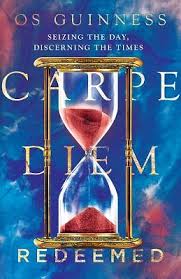
Carpe Diem Redeemed by Os Guinness

book carpe d

When Os Guinness has something to say, I’m ready to listen. All of his recent releases (Last Call for Liberty, Impossible People, and Fool’s Talk) have said something so needed for our day – don’t think trendy but timeless. This latest release, Carpe Diem Redeemed, which takes an old phrase meaning “seize the day” and does a play on a book from the philosophic world entitled Carpe Diem Regained takes that same sort of piercing look into our world today and pulls out how a Christian ought to think anyway. Fortunately, this book about “seizing the day” has nothing to do with the typical motivational tripe that floods the market in our day and yet says nothing. In fact, you won’t figure out the profound thing he is saying until he is finished saying it.

In presenting his thesis, Guinness must delve into and explain time from many angles. Even when you expect him to explain the obvious, he will express something that has stopped being obvious in our lives. In this first chapter alone, his introduction to time will pull in the concept of human freedom. Read it: it makes sense. His next chapter on the survival of the fastest explains time in our culture and the pressure it presents. Chapter 3 on the hidden tyranny of time is a treat. His explanation of the power of labeling should be proclaimed throughout the land. I’ve never read a better explanation of progressivism either. While he writes a book that strikes a chord with a conservative like me, he is not after a political system but a biblical view. That means he will step on any toes necessary to explain the truth.

Over the last few chapters, he will move to explaining how to “seize the day”. After he tells us the importance of understanding our times, you will be tempted to predict his final conclusion. And then you will be wrong. He will shock you and then you will agree with him and be encouraged in doing so. We don’t usually worry about spoilers for a book of this type, but I’m not going to spoil the surprise for you. Just read the book for yourself! You will be glad that you did.

I received this book free from the publisher. I was not required to write a positive review. The opinions I have expressed are my own. I am disclosing this in accordance with the Federal Trade Commission’s 16 CFR, Part 255.
Apologetics at the Cross by Chatraw and Allen

book apol cross.jpg

Every chapter deeper I got into this book the more it exceeded my expectations. Perhaps I expected that since this book is a textbook it would be a little stale, but I would now rate it as valuable as a read as it is a textbook. One reviewer said this book uses the template of Jesus crucified and risen in setting out to defend the faith rather than the Gospel which is used in most cases. That struck me as a non-distinction, which also lowered my anticipation, yet this book has effectively surveyed the past, brought us to the present, and stayed true to the Word of God.

The first section laid the foundation for apologetics in four chapters. That includes definitions, proof texts, examination of various approaches, and a fine review of the history of apologetics. These chapters teach us much, start the ball rolling on our grasping apologetics, and enlighten us on the successes and failures of apologists in the past. There’s also much to learn about how the culture at the time affected how apologetics was done.

The next section digs into theology in relation to apologetics in five chapters. Another pass is taken on the various approaches of apologetics so that we might glean what is good from each one. You will learn how far various methods can go, and where they might let you down in dealing with another person. I felt the chapters were ideal in helping pull out what was best from what apologists of the past have done. There’s also much emphasis on our living out our faith as a key in apologetics. I fear that is too often missed. In this theological section, apologetics are brought to the foot of the cross. Important information like how our sin nature corrupts human reason, our unrealistic expectations, and the absolute necessity of humility in apologetics. We are also taught to look at the whole person which will use reason to aim at the mind but will also look at the heart, or the whole of the person.

The final section looks at the practice of apologetics in four chapters. These chapters had brilliant insights into our age. What we call postmodernism, they call late modernism, but in any event, our times create new challenges in apologetics. The incredible amount of spin that goes on in our culture makes people think that our presentation of the Gospel is but our attempt to spin the facts to gain something from them. The authors give wonderful suggestions on how to deal with that difficulty in the most effective way. Kindness and humility are still essential.

There’s no doubt that this book beautifully succeeds in its advertised goal of being a quality textbook. To my mind, it too would win out as one of the best possible books for us to have to use in our own study of apologetics. I guarantee you it will be one of the first ones that I will reach for!

I received this book free from the publisher. I was not required to write a positive review. The opinions I have expressed are my own. I am disclosing this in accordance with the Federal Trade Commission’s 16 CFR, Part 255.
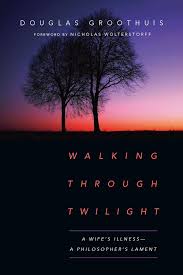
Walking Through Twilight by Douglas Groothuis

book teilight

This book grabs you. You pick it up, anticipate what you will find, and then get surprised. Though being real, or “raw” as they say, is all the rage these days, after you read this book you may decide, as I did, that you’ve hardly ever read something that’s “raw”. So much of the rawness of our day is merely façades more painstakingly crafted, but here the author detonates dynamite under his façades. He is a philosopher, an academic, an accomplished speaker, the man that is supposed to have it all figured out, but in the waves of bewilderment that crashed upon his soul as his wife descended into the twilight of dementia he found out he did not. What he could figure out when he forced himself to examine this bizarre, unexpected place is worth contemplating. It reminded me of my dark places, which were not as dark as his, and taught me what to examine the next time.

This effort is not along the same lines as the other titles Mr. Groothuis has produced, other than his quality writing skills. For example, I was greatly instructed by his “Philosophy in Seven Sentences”. He was able to marshal philosophy and especially the Bible for his struggles. He did it without an ounce of superficiality. He wasn’t able to tie everything up in neat little packages either. The profound part was that the more crushed he became the more sufficient his Savior became. I was moved.

Usually, when I review a book I overview the contents, but I think that would be a mistake in this case. Just experience it. Approach every chapter with a clean slate. You won’t regret it!

I received this book free from the publisher. I was not required to write a positive review. The opinions I have expressed are my own. I am disclosing this in accordance with the Federal Trade Commission’s 16 CFR, Part 255.

Faith and Reason by Henri Blocher

book faith reason

Henri Blocher is a respected theologian who delivers here what he calls “a primer on apologetics”. Though I would disagree with him on a few points, he gives much wonderful fodder for the tension between faith and reason. His style reminds me in some degree of C. S. Lewis. He has a knack for making some deep concepts understandable. This is my first encounter with Mr. Blocher, but rank him as a voice worth considering in the area of practical apologetics.

Chapter 1 is something of a historical survey that describes where we’ve come from and where we are today. He makes clear how reason has become in conflict with Scripture. He even explains that many of us feel fatigue because we are required to use reason every day. In chapter 2 he exposes rationalism to the light of Scripture. That entails explaining what rationalism is and how its use can never be free of assumptions. He ends the chapter with explicit explanation of what the Bible teaches on the subject.

Chapter 3 is outstanding as he tackles the rationalistic belief that the Bible is a nebulous book twisted to say whatever the current user wants it to say. That leads to a discussion of the biblical text itself and its trustworthiness. The middle of this chapter is extraordinary in its explanation of the rationalist’s presuppositions that are brought into their conclusions. They see redaction and other things that undermine the trustworthiness of the text because of their own presupposition to reject it. In other words, they present a self-fulfilling prophecy.

Chapter 4 discusses what modern science is, and how a misunderstanding of what it is partly explains why it is so antagonistic to faith. In chapter 5 he disallows the conclusion that scientific research has positively concluded the Bible to be in error. I can’t follow him in what appears to be his belief in theistic evolution, or in his explanation of the reality of miracles in how he still downplays a few of them himself, but still there is much food for thought even in that discussion. I can agree, though, with him and his conclusion that the believer is not to press for miracles because the Lord only uses them on occasion to confirm his message.

At only a little over 100 pages, I imagine this is just right for what many people may want to ponder the dilemma that divides faith and reason. I think everyone would be helped by interacting with what is said here, so I recommend this volume warmly.

I received this book free from the publisher. I was not required to write a positive review. The opinions I have expressed are my own. I am disclosing this in accordance with the Federal Trade Commission’s 16 CFR, Part 255.

The World’s Oldest Alphabet by Douglas Petrovich

book-woa

This book is one paradigm-shifting title. Douglas Petrovich is a diligent scholar who is considered an expert in “epigraphy, palaeography, lexicography, and comparative linguistics and literature”. The scholarly world has been in an ongoing debate for many years over what language has the world’s first alphabetic script. Mr. Petrovich has worked through the ancient specimens that we have with their proto-consonantal script and has proven conclusively that it is Hebrew. He has even translated these previously untranslated specimens. That the highly-respected scholar Eugene Merrill has studied his work and given it the highest recommendation proves its trustworthiness.

The beautiful thing about this new book is the boon this it is to those of us who believe in the complete veracity of the Bible. I don’t mean it’s a substitute for faith, but that it is another help to doubters. A quick Google search will show you that several major news organizations have already carried stories on Mr. Petrovich’s work. While many of us so appreciate this book, it will probably be something like a bomb going off in the scholarly world where so many do not believe the Bible they study. Going forward, all doubters should be sent to this book.

Though this book has all the necessary minute data to prove its thesis, non-specialists like me can still follow the argument. He well presents the history of what has been thought over the years and carefully outlines what he went through to reach his conclusions. He is not just pulling his conclusions out of the sky. No, he put an incredible amount of work into solving this long-standing puzzle.

The book itself is attractive and has the design of other fine Carta Jerusalem titles. The maps and illustrations are outstanding and really help you to follow what Mr. Petrovich is saying. This book will be discussed for many years and will likely reach the status of one of the most important volumes ever in its field. I highly recommend it.

I received this book free from the publisher. I was not required to write a positive review. The opinions I have expressed are my own. I am disclosing this in accordance with the Federal Trade Commission’s 16 CFR, Part 255.

Philosophy In Seven Sentences by Groothuis

philosophy

This book is an experience. It takes an impenetrable subject for many and makes it fascinating. I found this volume far superior to a semester-long undergraduate class I took years ago. He makes it relevant, interesting, and all with a Christian guide to take you along. The writing style is engaging, enjoyable, and captivating. I only use the cliche “I couldn’t put it down” because I never dreamed that would be the case.

Taking seven great philosophers along with their most famous statements was a masterstroke in giving an introduction to philosophy in a small compass. Again, I opened the book thinking that would never work, only to discover it did.

He begins with Protagoras, who I knew nothing about, and taught me about using a measurement outside ourselves. He taught something about today. When he used a statement that many agree with,  including his students,  and then shocked us with the knowledge that it was a philosophy statement of a serial killer, you knew he had something worthwhile to say.

He brought Socrates to life. In fact, I feel I never knew him at all until this book. I learned too how we hear more of a caricature of these philosophers rather than what they really believed. It’s the same with Aristotle. We learn too that if we ignore the basic Law of Noncontradiction we give up everything we could ever know.

He well explained Augustine from a philosophic viewpoint while in no way damaging his theology. He made plain Descartes and Pascal too. He made me realize I had Kierkegard all wrong in that superb chapter.

All in all, this is a masterpiece.
 

I received this book free from the publisher. I was not required to write a positive review. The opinions I have expressed are my own. I am disclosing this in accordance with the Federal Trade Commission’s 16 CFR, Part 255.