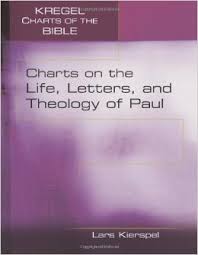
Charts On The Life, Letters, And Theology Of Paul by Lars Kierspel

Here is a different sort of help for study of all things Paul. The charts involved put in visual form the kind of information that will will really propel our studies forward. Part of the Kregel Charts of the Bible, this is one of the finer chart volumes that I have seen.

The first section covers background of the Greco-Roman influence of the times and how it affected Jewish life. The next section gets more specific to Paul and there are charts on his life and parallels with Christ and others that are highly instructive. You will find charts on unique things like cities visited by Paul. It so helps to see information presented in ways different than you usually get it.

His speeches, his miracles, his prayers–these can be developed into further studies. The section on his letters helps with OT quotations and allusions and then, as some of the most helpful charts, are those for specific letters.

Finally, the last section deals with deeper theological issues. These charts are especially helpful as many have their greatest struggles in this area.

This volume is a dandy and I am glad to have it at hand.

I received this book free from the publisher. I was not required to write a positive review. The opinions I have expressed are my own. I am disclosing this in accordance with the Federal Trade Commission’s 16 CFR, Part 255.charts
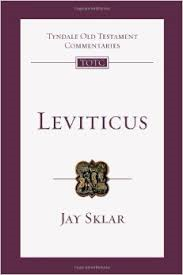
Leviticus (TOTC) by Jay Sklar

leviticus

Most Christians find Leviticus rather difficult to grasp. Here is a volume aimed at Bible students and pastors that will provide real help at an economical price. Mr. Skylar has spent much of his career on this portion of Scripture and it shows.

There is a fine Introduction that runs through page 84. It well addresses the more vexing issues of Leviticus. Solidly conservative in its conclusions, this volume well handles the ethical questions that arise. The categories of sin that are clearly present are explained as are the ritual states of impure, pure, and holy. Great care is given where our cultural simply is not familiar with what is asked of the Israelites. There are some fine charts that give visual help and greatly increase our comprehension.

Blood atonement is given its due. the illustration of a check covering the debt before it clears the bank was distinctly rewarding. Because it is so foreign to our thinking, ritual and why it can be so important is brought out. The Introduction ends where I think any one on Leviticus should–Jesus!

In the commentary proper every passage is given sufficient, interesting, and helpful discussion. You could not help but gain by this fine volume. The Tyndale Commentary series now under revision finds another worthy volume here. I highly recommend it.

I received this book free from the publisher. I was not required to write a positive review. The opinions I have expressed are my own. I am disclosing this in accordance with the Federal Trade Commission’s 16 CFR, Part 255.
For other Commentary Reviews, click here.

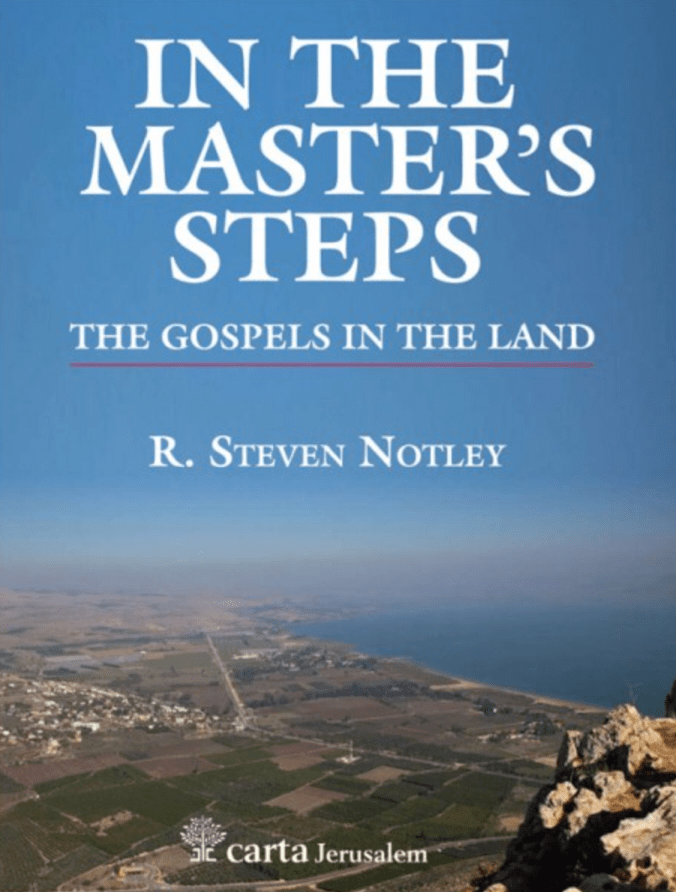
In The Steps Of The Master–A Great Resource!

Are you fascinated by the times of the Gospels? I always have been and love any help I can get to understanding the time and places involved in Christ’s earthly ministry. Here is a tool I want to recommend to every Bible student. This volume brings out its title of “In The Master’s Steps: The Gospels In The Land” in a helpful way.

This is partially taken from the larger, comprehensive work entitled “The Sacred Bridge”, which as a pastor I find a fascinating work. Carta, in my judgment, is the premier atlas maker of our day. Though this is aimed to a wider audience, it is in no way a piece of fluff. You can gain great knowledge in this volume. 

The text relays much information (I disagree on a few points). The pictures are attractive and helpful. The maps, though, are simply incredible. Make sure you notice a few of my favorites: the 3-D map of the Sea of Galilee with all the respective events involving Christ (pg. 33), the maps of Jericho (pg. 57), and numerous physical maps of the land.

Since this volume is an attempt to reach out to a wider audience than Carta’s usual audience of scholars and pastors, I decided to put it to the test. I asked my 15-year-old son to go to my office alone and spend time in this book and tell me what he thought. After he spent a good bit of time perusing it, he let me know he loved it and found it so interesting. That is, to my mind, the ultimate passing of the test of what this volume set out to do. I think you will love it too.

I received this book free from the publisher. I was not required to write a positive review. The opinions I have expressed are my own. I am disclosing this in accordance with the Federal Trade Commission’s 16 CFR, Part 255. 

Related article:

Bible Atlas


Job by Cyril Barber

Cyril Barber gives us a fine volume on Job aimed at laypeople, but quite pleasing to pastors. I will never understand why volumes by this fine writer aren’t more well known. He shows such an outstanding, broad reading behind what he writes.

He gives great insight into Job, his times, his family situation, his wife, and his physical ailments. Discussion of Satan at work is equally enlightening. The discussion of the three friends and the psychological impact on Job is explained in a way that opens up the text.

Along the way there is helpful discussion on the theology of suffering, which is one of the keys of the book. He gives Elihu’s comments good perspective too at the end. The length is ideal for what this volume purports to be.

While this will can not take the place of an exegetical commentary, read this volume after studying such commentaries and you will be greatly enriched.

This volume may not be as good or as in-depth as his volumes on First and Second Kings, but it is still quite helpful. I recommend it and all the Cyril Barber volumes published by Wipf & Stock.

I received this book free from the publisher. I was not required to write a positive review. The opinions I have expressed are my own. I am disclosing this in accordance with the Federal Trade Commission’s 16 CFR, Part 255.

IMG_2449


7 Men by Eric Metaxas

Here is a biographic volume consisting of seven vignettes. The subtitle of “And the secret of their greatness” hints at what author Eric Metaxes is up to. Never was an introduction more indispensable than here where we learn that he is not attempting to give an authoritative biographic word, but to examine the questions: 1) What is a man? and b) What makes a man great?

This is not profound biography. There is likely very little new here beyond what you might read in a longer biography, but his wrestling with real manhood is more of a success. At times, he rambles about his own personal thoughts or reminiscences of the subject at hand, but it all flows well. Though he has written some well-received biographies, this volume appears to be put together more in haste.

Still, it is enjoyable reading and goes fast. I left it wanting to read a fuller length biography of at least two of his 7 men. The addition of the chapter on Corrie Ten Boom was nice too.

There is a pretty good tracing of Christianity in each life and some good insights. Some of us would question Pope John Paul II being included and offered as if on the same level of Christianity as the others, but even that chapter told all I might ever want to know of him in an interesting way.

These books of collated mini-biographies can be a nice change up in our reading schedule and can suggest future reading. For what it is, it is well done.

I received this book free from the publisher. I was not required to write a positive review. The opinions I have expressed are my own. I am disclosing this in accordance with the Federal Trade Commission’s 16 CFR, Part 255.
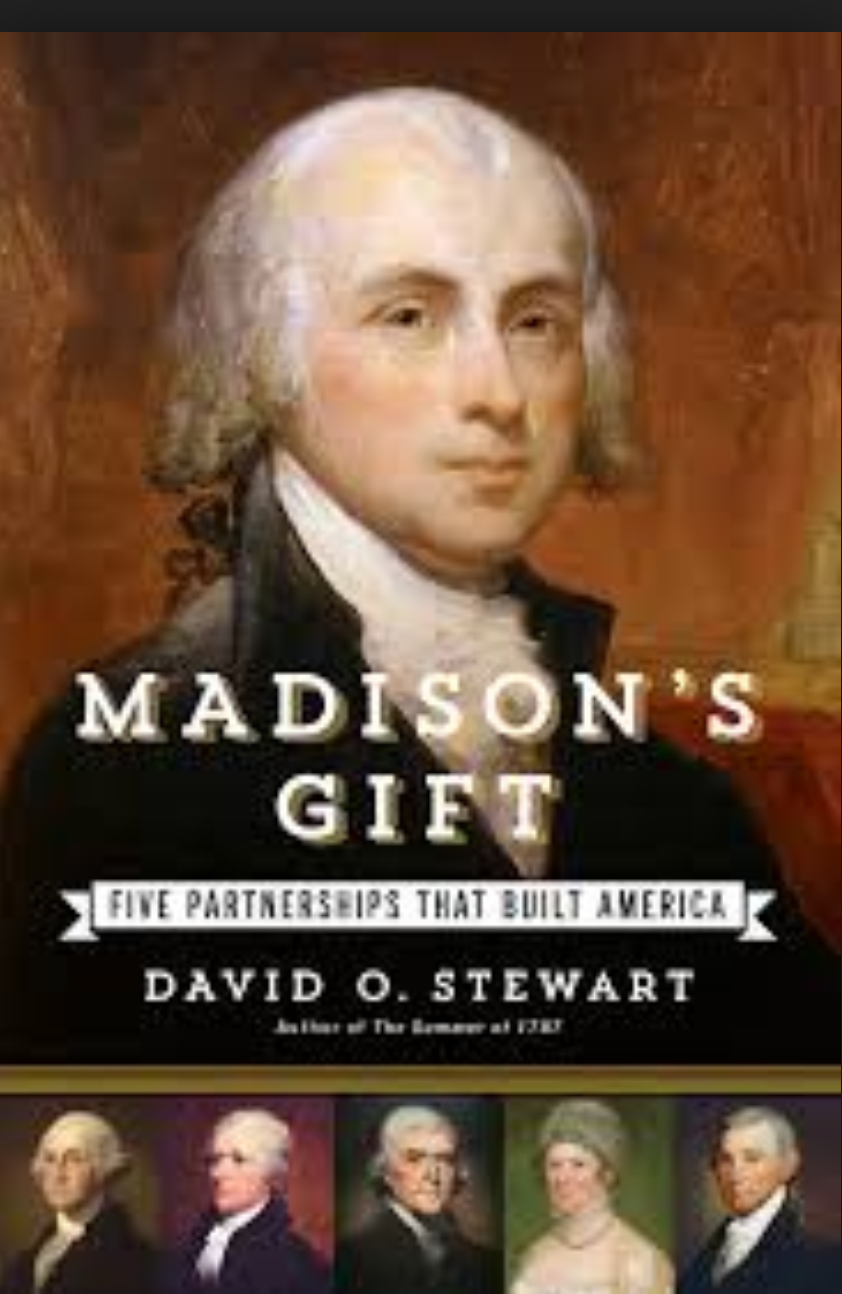


Madison’s Gift by David O. Stewart

Here is a brilliantly executed volume on one of our most underrated Presidents, James Madison. Madison was a man little of physical stature, one that stood in the shadows of Washington and Jefferson, but who did more heavy lifting on what our Constitution actually says than anyone. A diligent student and a tireless worker, Madison earned the label “Father of the Constitution.”


Instead of a cradle-to-grave standard biography, Mr. Stewart gives us his life through the lens of the five key relationships of his life. In that every life is probably partially defined by our five closest relationships, this volume succeeds in bringing Madison alive. 


His relationship with Washington was interesting in that he would have been considered Washington’s protege, but that relationship changed as Washington focused on holding the Union together while Madison increasingly focused on the political party he helped form. The writing here is so good you find yourself sad that the relationship was what it was by Washington’s death.


With Alexander Hamilton, you are shocked again as you read of their close association, common goals, and joint writing of The Federalist Papers giving way to being key leaders of rival parties.


Jefferson and Madison were soul mates and of equal intellectual powers. You will read of the unwavering friendship where Madison always gladly deferred to Jefferson.


The most shocking aspect of his relationship with James Monroe is how often they had a falling out only to be great friends again.


With Dolley, he found the perfect wife for what he did with his life. Though he married late, you will see how well she complemented his work.


I thought this approach to Madison would be a chronological nightmare for the reader, but Mr. Stewart’s writing washed that fear away.  I feel I know a lot more about what made Madison tick and must rate this volume a winner!

I received this book free from the publisher. I was not required to write a positive review. The opinions I have expressed are my own. I am disclosing this in accordance with the Federal Trade Commission’s 16 CFR, Part 255.  


Be looking for a post on presidential biographies coming soon.

IMG_2437

Acts (EP Study Commentary) by Guy Prentiss Waters

Looking for a solid commentary on Acts aimed more at expositional help rather than just exegetical detail? You ought to check out the new EP Study Commentary volume by Guy Prentiss Waters. That is not to say that it isn’t exegetically sound, but that it is written in a way at once interesting and clear.


The Introduction is short but gets you going in the right direction. Mr. Waters writes from both a reformed and amillennial perspective, and though that is not my own viewpoint, I still recommend this volume anyway because of the perceptive comments he so often gives. In fact, I have a growing appreciation for this series as a whole, though I only have a few volumes, because of its warm-hearted approach. As with the series, this volume is particularly pastor-friendly.


Perhaps the best commendation I can give it is the nuggets I found myself underlining as I perused it. Yes, I found some paragraphs that I disagreed with, but I never failed to see one who loved our Lord, His Word, and the Book of Acts in particular. The application was of the sort one hopes to find in preaching. The commentary length is ideal as well.


I appreciate the exegetical commentaries and use them often, but it is volumes like these where the reading turns pleasant. I wholeheartedly recommend it.

I received this book free from the publisher. I was not required to write a positive review. The opinions I have expressed are my own. I am disclosing this in accordance with the Federal Trade Commission’s 16 CFR, Part 255. 
Check out many other commentaries here. 


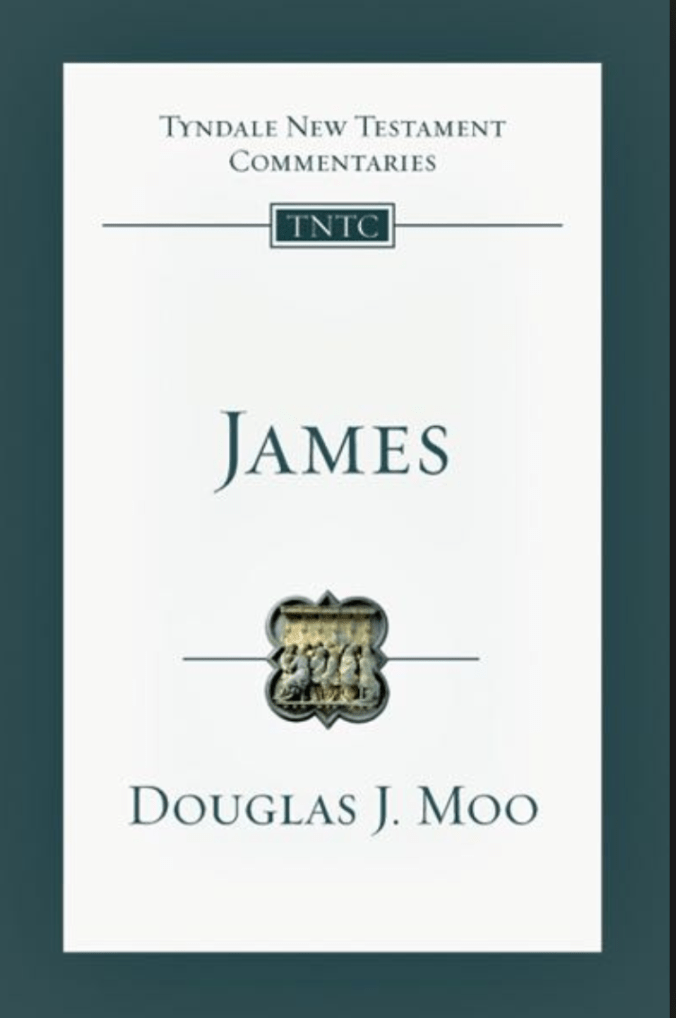
James (Rev. Ed.) [TNTC] by Moo

Tyndale Commentaries (IVP) continues its quest to revise its venerable Old and New Testament series. With a few Old Testament volumes already out, this volume is the first one for the New Testament. In this case, the editors chose to retain well-known scholar Douglas Moo. Although it is not a major revision (some paragraphs are unchanged), Mr. Moo is an active scholar who has also written a larger commentary on James as well as several others. The editors made a good choice here.

As we have come to expect from this series, the introduction is succinct and appropriate. All the key issues are brought up and made sense of. Authorship, background, date, structure, and theological emphasis are all well covered. I found myself agreeing with many of his conclusions.

In the commentary, each passage is discussed in terms of context, commentary, and theology. That format is ideal to help grasp the meaning of the passage. The help is more substantial than many of the briefer commentaries out there.

In the key test in evaluating the value of any commentary on James, this volume succeeds in making friends of Paul and James and their respective theologies. Both in the Introduction and the commentary proper, Mr. Moo, with clear analysis of the theological points and probing interaction with the text itself, makes his case.

Of course there is much more to James and this volume handles it well too. This is a solid commentary.

I received this book free from the publisher. I was not required to write a positive review. The opinions I have expressed are my own. I am disclosing this in accordance with the Federal Trade Commission’s 16 CFR, Part 255.    
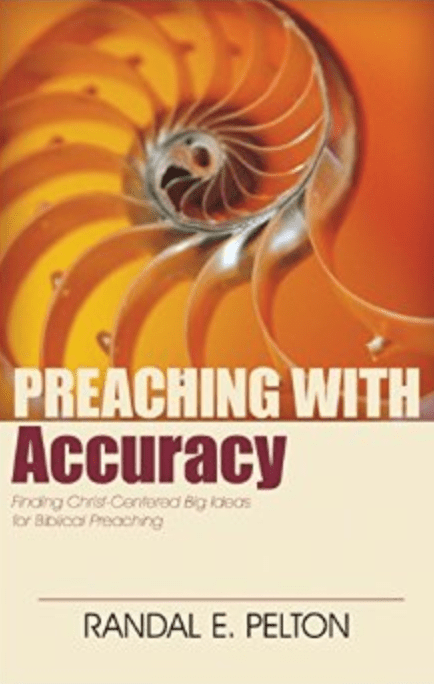


Preaching With Accuracy by Pelton (Books on the Ministry #17)

Do you ever struggle with how to get to the bottom of a text while being true to its context? It is an area where we can use a little help as so much preaching today totally misses the mark. Here is a book by Randell Pelton, and published by Kregel, of manageable length to help us in that endeavor. If you read the detailed footnotes, you will double the length and depth.

Mr. Pelton traces out the particulars of his own method, but you would not have to rigidly follow his steps to glean from this book.His Introduction clearly lays out his philosophy of true preaching and how he will discuss it. Chapter 1 is a passionate plea to show that expository preaching still works. He shows how a seeker-sensitive approach has changed preaching for the worse–we have morphed into little self-help talks that obscure the vibrant power of Scripture. He also gives guidance on picking Scripture portions to preach and explains how to “cut” the text.

The bulk of the book defines his method. If you have preached long enough to have settled into your own pattern, for the better or worse, as I have, you can still get great insight here. The point of any such method is to be true to Scripture and say in context. He has his own terminology, but it is mostly watching the context both near and far. I loved his guidance on preaching the OT (sensus plenior).

His last point is focusing on a Christ-centered hermeneutic as the final point of context. He feels Tim Keller is the role model here. His goal is to avoid moralistic preaching and stay Gospel-focused. This can be overdone, in my view, as some portions of Scripture have a true ethical or moralistic component, but that Christ is our only hope to live it is also valid.

A good reminder for seasoned preachers, and a great help to less experienced ones, this volume deserves high ratings.

I received this book free from the publisher. I was not required to write a positive review. The opinions I have expressed are my own. I am disclosing this in accordance with the Federal Trade Commission’s 16 CFR, Part 255.    
Find all books in the Books On The Ministry series here.


Dead Wake by Erik Larson

The last crossing of the Lusitania gets a vivid, dramatic telling in this superb volume. This was my first go with Mr. Larson, but I found his writing matched the superlative blurbs I’ve seen for his other books. My knowledge was limited on the Lusitania, so learning and exciting reading met together here.


The book never drags and is filled with tension throughout as you know what is coming. We meet several of the passengers, see the dynamics of personality of Captain Turner, and back office workings of the Cunard ship company. You get to know them to the point that their fate during the actual sinking is high drama. The scene of the dead wake itself, the torpedoe coming across the water and being seen by many, is well done too.


 We learn of Room 40 and what the Admiralty, including Churchill, knew about the U-boats. They could not tip their hand and risk losing the Germans knowing about the codes that they had broken. Then, from German records of the captain of U-20, we watch the story unfold from their perspective. We learn too of complications because of war that added to the horror of the event that could have possibly been avoided. 


In a few paragraphs here and there President Wilson’s story is brought into the story. You will be convinced his budding romance had a great effect on what he did during these critical events.


Though this volume can hold its own with a great novel, I truly believe it passes the test of being well researched as well. Though Mr. Larson made some good conclusions, he seemed to strive make you and I able to make our own. The book succeeded on every level (except the attractive book needed pictures) and I highly recommend it as 5-star plus!

I received this book free from the publisher. I was not required to write a positive review. The opinions I have expressed are my own. I am disclosing this in accordance with the Federal Trade Commission’s 16 CFR, Part 255.