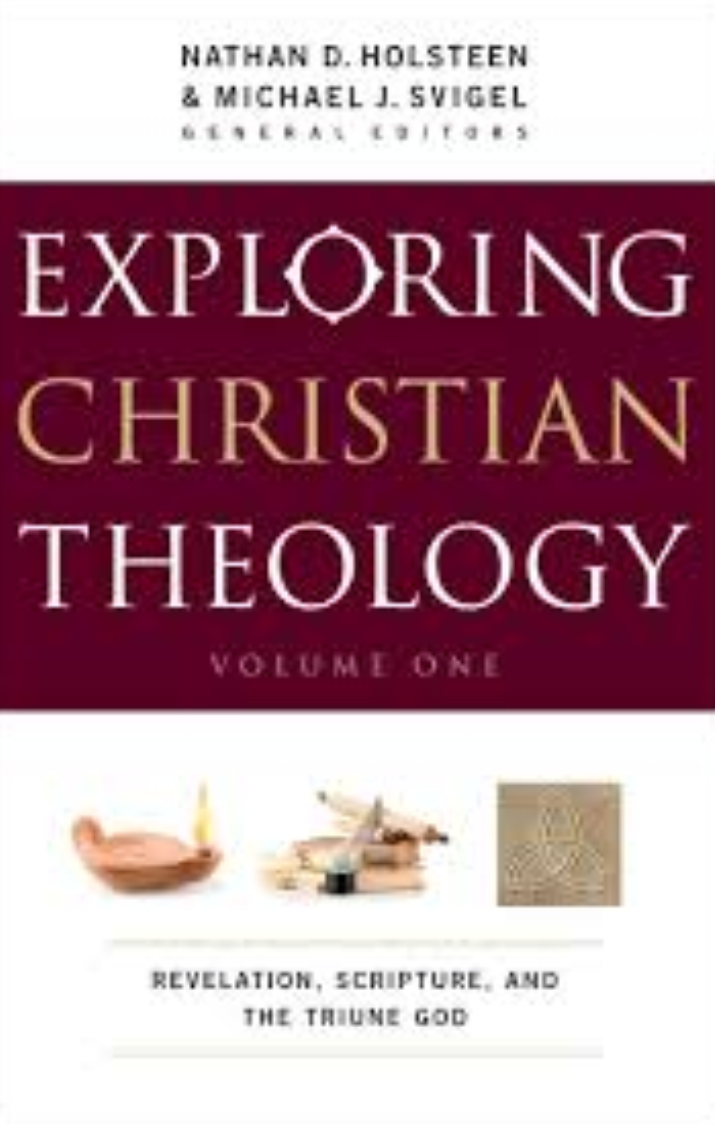
Exploring Christian Theology–a Fine New Volume

Are you intimidated by the ten-pound systematic theology volumes out there? Do you still want some real depth and genuine help? You should check out the first volume, then, of the projected three-volume series Exploring Christian Theology, edited by Nathan Holsteen and Michael Svigel, with this first volume written by the editors along with Douglas Blount and Glenn Krieder.

For some reason, I opened this volume with low expectations. I read those ten-pounders sometimes and enjoy it. Then in the first few pages I read language that I felt was trying too hard to engage modern readers. As I kept reading, however, I was won over. This volume is a treat.

The editors claim their perspective here “differs from other mini-theologies in that strives to present a broad consensus, not a condensed systematic model of one evangelical teacher or Protestant tradition.” To my mind, they succeeded. They may not have written from one narrow angle, but they stayed safely within the confines of conservative, Bible-believing parameters. Can you tell I liked it?

The first part covers Revelation, Scripture, and Truth. Their explanation of inspiration and inerrancy was choice. I might squabble over a detail here or there, but they provoked thought and explained the touchiest issues of our day well.

The next section on the Triune God was simply superb. The section on the kenosis of Christ and the debates of the Early Church on Christology was one of the best I have ever read. It rivals the ten-pound volumes!

Each section ends with quotes from all time periods of Christianity on the subject. You could see, for example, that full inspiration of Scripture has been the historic position. Newer positions are clearly deviations.

Get this book. Better yet, read it carefully. I highly recommend it.

I received this book free from the publisher. I was not required to write a positive review. The opinions I have expressed are my own. I am disclosing this in accordance with the Federal Trade Commission’s 16 CFR, Part 255.
IMG_2172-1.PNG

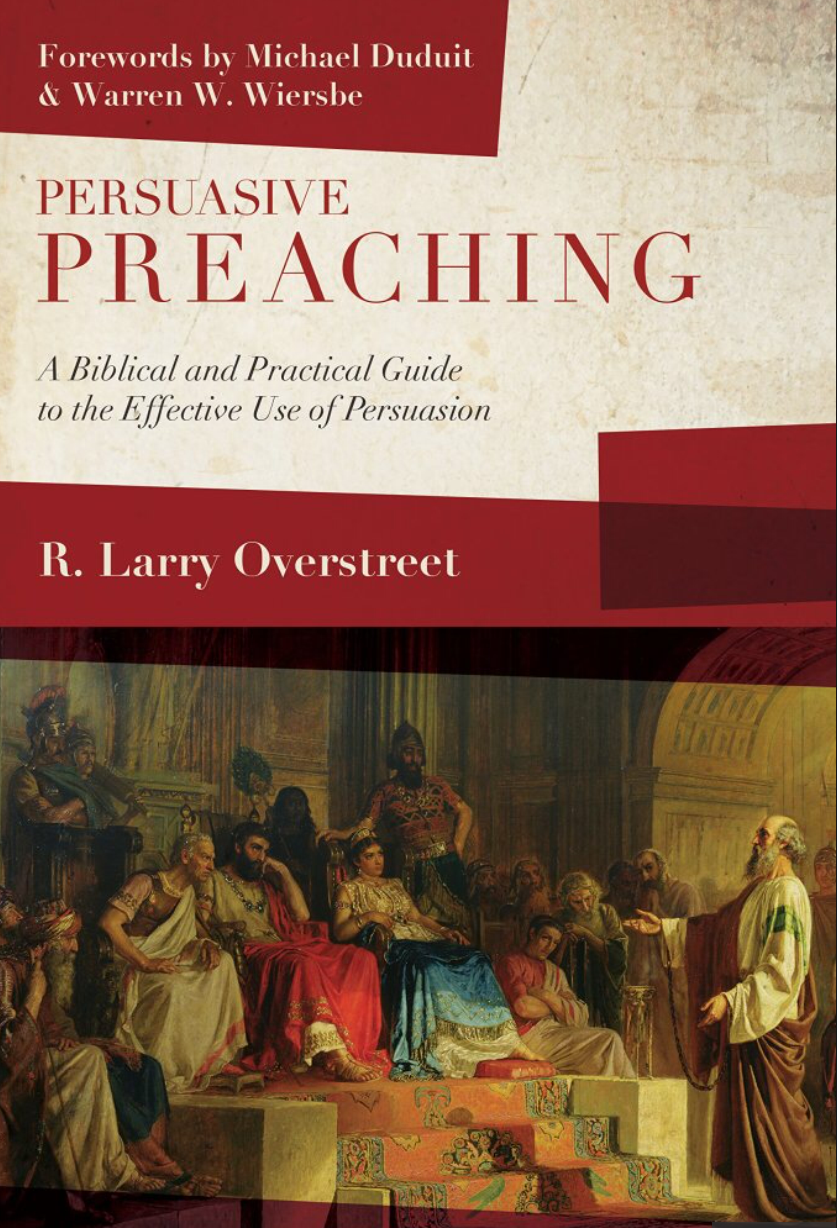
Persuasive Preaching by Overstreet (Books on the Ministry #16)

Have you ever given thought to the role persuasion plays, or should play, in preaching? What are its legitimate roles? You will, then, appreciate this new volume entitled Persuasive Preaching by R. Larry Overstreet and published by Weaver. The subtitle “A Biblical and Practical Guide to the Effective Use of Persuasion” aptly describes the author’s approach.

He feels persuasion is getting a bum rap these days and the quality of preaching suffers accordingly. With a scholar’s touch, he defines persuasion and what it has looked like in preaching in the past. God’s Word, to be sure, calls for a response. He had an excellent discussion on post-modernism and how that has negatively affected preaching. He was spot on.

He gives deep discussion on the Hebrew and Greek associated with preaching as found in Scripture. That may be heavy for some readers, but his point was surely proven–persuasion is part of preaching.

Chapter 6 on ethos with its vivid discussion of important passages was my favorite in the book. It was, can I say, the most persuasive.

Toward the end the book turned more toward how to practically put persuasion in our preaching. Particularly helpful was the the discussion on persuasion versus manipulation. Finally, he points out the necessity of the Holy Spirit in our preaching.

We preachers should wrestle with this subject and this book is likely the best we have on this specific point. I recommend it.

I received this book free from the publisher. I was not required to write a positive review. The opinions I have expressed are my own. I am disclosing this in accordance with the Federal Trade Commission’s 16 CFR, Part 255.

Other books in this series

IMG_2165.PNG

A Recently Discovered Gem–Acts by Lightfoot

We have a potpourri of good things here. There is the commentary itself, an interesting story of how it was found after so long, and insight into J. B. Lightfoot the prodigious scholar.

Many of us have had Lightfoot’s commentaries on our shelves for years. I thought I had all of them. I did have all that was in print. Then Ben Witherington, a modern scholar and Lightfoot admirer, went digging around the dusty corners of the Durham Cathedral Library and found unpublished commentary material. Here we have Acts 1-21 and volumes on John and II Corinthians/ I Peter are forthcoming. The story, with accompanying photos, was fascinating. It is surprising to have a new volume by a guy who died in 1889.

The commentary is of his high standards. If you are like me, you will need an interlinear handy because the Greek is untranslated. I am glad to have this commentary.

The biographical sketch and the homage at the end give us a intimate view of the famous scholar. He never married and had an incredible output of work. He spoke several languages fluently. He had encyclopedic knowledge of Greek–Classical, Koine, and the Greek of the Fathers. I might not agree with all his doctrinal views, and I certainly do not agree with him on which underlying texts are best, but when he speaks on language I him him worthy of my attention. I will never have his language gift, but I am glad I can glean from his.

The Appendixes have more goodies including an article on Acts in Smith’s Dictionary of the Bible. My edition of that dictionary did not have his article, so I was glad to see it.

Thanks IVP for printing this unique work. I recommend it.

I received this book free from the publisher. I was not required to write a positive review. The opinions I have expressed are my own. I am disclosing this in accordance with the Federal Trade Commission’s 16 CFR, Part 255.
IMG_2162.PNG

Psalms by Tremper Longman (TOTC)

The venerable Tyndale commentary series is in the process of updating the OT volumes. Coming up to the Psalms volume, IVP had a dilemma. Derek Kidner’s volume in the series is one of the best succinct commentaries written on a book of the Bible ever. How do you retire such an author with his winning entry in your commentary set?

So what did IVP do? Some staffer came up with the masterstroke publishing idea for the quandary. Reprint the Kidner’s titles as “Classic Commentaries” (a quick search on IVP and you can find them as they are available now) and pull out one of the most prolific commentators on Wisdom Literature today, Tremper Longman, and let him do the new Tyndale volume. I may not always agree with Mr. Longman, but I have always been impressed by his prodigious output. Does he ever lay down his pen?

He gives us a near 500 page offering on the 150 Psalms. His introduction is short, but sufficiently overviews the issues involved in studying the Psalms. Then he gives a short paragraph on context to help orient us followed by commentary in chunks that make sense. He ends with a “meaning” section that helps us think about directions for application. He does a fine job.

I checked some on the Psalms in this volume against the new massive volumes by Allen Ross and the old Kidner volumes. I feel Longman well addresses, in a more compressed format as called for in this series, issues that Mr. Ross handles deeply and masterfully. Did he excel Mr. Kidner? Probably not, but the solution for me is to possess them both and use them often.

I have loved and used the entire Tyndale Commentarty for years. We need commentaries of this style to go along with our larger exegetical ones to help not lose sight of the forest in looking at the trees. This volume lives up to its high standards and I highly recommend it.

I received this book free from the publisher. I was not required to write a positive review. The opinions I have expressed are my own. I am disclosing this in accordance with the Federal Trade Commission’s 16 CFR, Part 255.
IMG_2146.PNG

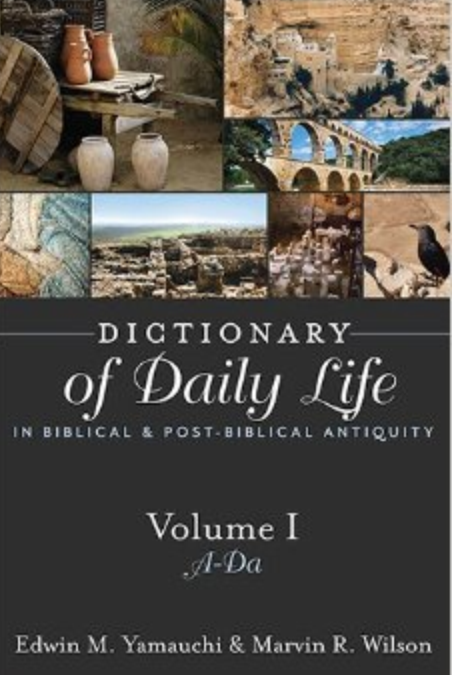
Dictionary Of Daily Life: Volume 1–A Review

Are you looking for a resource to add some real spice to your Bible study? You need to check out Dictionary of Daily Life in Biblical & Post-Biblical Antiquity edited by Edwin M. Yamauchi and Marvin R. Wilson and published by Hendrickson. This first release of a planned three-volume set covers A-Da.

This attractive volume has two special features. It focuses more on subjects that might occur to you and I rather than just Bible terms. Things like “Barbers and Beards” and “Bellows and Furnaces” would be a little harder to track down in a typical Bible encyclopedia set. The other distinction is price. Many Bible students never get down to purchasing Bible encyclopedia sets because of the full-frontal assault upon their wallets. This volume is more within financial reach.

Besides being enlightening, and a real aid in sermon or lesson preparation, these articles are fun. They at times tell about things you want to know but whose information you never quite came across. Subjects like abortion, animal husbandry, bathing, and clothing are just a few of those that make fascinating reading.

As with any such work, you may wonder how the choice of entries was arrived at, and at times you may not buy into the evidence presented, but overall the work is outstanding. Looking at every subject in the chronological order of OT, NT, the Near Eastern World, the Greco-Roman, the Jewish World, and the Christian World is especially ideal.

I recommend this volume and eagerly await the other two volumes to complete the set.

I received this book free from the publisher. I was not required to write a positive review. The opinions I have expressed are my own. I am disclosing this in accordance with the Federal Trade Commission’s 16 CFR, Part 255.
IMG_2140.PNG

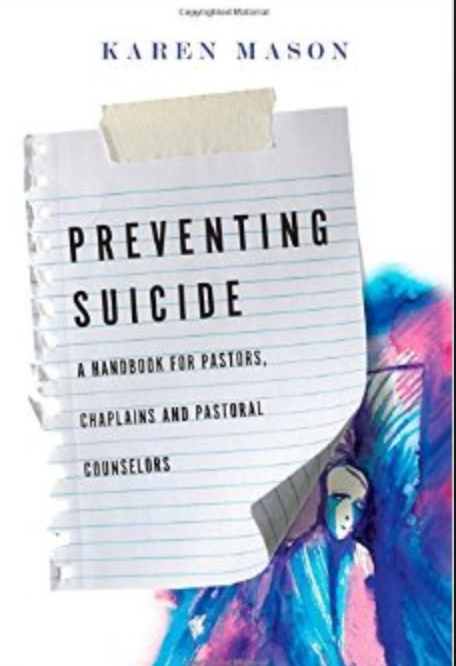
Preventing Suicide: A Handbook For Pastors, Chaplains, And Pastoral Counselors

This is, of course, an unpleasant subject, yet in reading this volume I realized how poorly prepared I am as a pastor to deal with this crisis in my ministry should it, God forbid, happen. As I thought about it, I recalled pastor friends who have faced this very trial. I can only imagine the anguish of soul of these shepherds, not to mention the families whose world is suddenly turned upside down.

This volume by Karen Mason and published by IVP is astonishingly effective in its goal of bridging the gap between theology and psychology in addressing this timely issue. The psychology was restrained and effective while the theology was quite good from the author whose experience ran a little more in psychology.

The book is practical in its emphasis on prevention, ministering, and the role of churches and pastors. We get a good overview of what suicide is and who most often dies by suicide (she tells us not to say “commit suicide”).

The chapter on “Shattering Myths About Suicide” embarrassed me because I held to most of them! She well described the common positions of those who hold suicide is not a sin as well as those who do including those who wrongly say a true Christian cannot die by suicide. There are real aids to families who fear this erroneous doctrine to be gleaned here.

There is detailed help in dealing with a suicidal feelings as well as ministering to those struggling after being left behind. The ever present issue of an unfair stigma on a grieving family is well presented here too.

I recommend all my pastor friends, as well as those who have need to deal with issue, grab a copy of this fine resource.

I received this book free from the publisher. I was not required to write a positive review. The opinions I have expressed are my own. I am disclosing this in accordance with the Federal Trade Commission’s 16 CFR, Part 255.

IMG_2139.PNG

The Radical Disciple by John Stott

I love a simple, yet profound, challenge for my Christian life. I love a devotional work with enough bite to deliver that challenge. John Stott’s final volume is just such a work.

He covers eight areas that he feels are “some neglected aspects of our calling”. Short, sweet, and inspiring, these chapters carry more punch than their size suggested.

His first chapter entitled “Noncormity” was extraordinary. In only eleven pages he wove the ideas of escapism and conformism being forbidden, the failure of pluralism, materialism, and relativism, and ugliness of narcissism in a meaningful way. He explained how self-love is a sign of the last days. The next chapter on Christlikeness was moving in that he wrote from the perspective that “God wants his people to become like Christ, for Christlikeness is the will of God for the people of God.

In the chapter on maturity he answers the question about what is the best description of Christianity today. What is that answer? “Growth without depth.” Wow! Could it be better stated? That whole chapter was memorable.

I really couldn’t connect on the next two chapters, but the rest of the chapter more than compensated for the two I felt of little worth. After these two, he got back on track.

The final two on dependence and death were as compelling as any I have read. Dependence, even in a declining health situation, can be a good thing. His own suffering punctuated the words that made sense even if we must begrudgingly admit it. His chapter on death would not have meant as much written by a young man. He would die within two years of writing this chapter. He stared down death as one safe in Jesus and I was moved as I read it.

Reasonably priced, not too long, but a real spiritual treat–I recommend this as a treasure.

I received this book free from the publisher. I was not required to write a positive review. The opinions I have expressed are my own. I am disclosing this in accordance with the Federal Trade Commission’s 16 CFR, Part 255.
Perspectives On Our Struggle With Sin: 3 Views Of Romans 7~Book Review

Have you ever wrestled with Romans 7? Are you aware of the battleground that exists upon the soil of its meaning? Would you like a little help? This volume edited by Terry Wilder, and published by B & H Publishing, clearly defines the battle lines and gives us enough detail to form our own opinion. I can hardly think of a better approach than bringing 3 writers who each strongly hold to one of the main positions, and letting them write and engage with passion while maintaining Christian respect for each other.

Grant Osborne writes in favor of 7:14-25 representing Christian experience after salvation. Stephen Chester tackles the idea that those verses are Paul’s description of wrestling with sin prior to conversion. Mark Seifrid argues that it is not really autobiographical at all, but simply one standing before the Law. Finally, Chad Brand concludes the discussion by addressing how we might use this passage pastorally.

The value of this book is that instead of shouting out rhetoric, or worse, invectives, they dig into the text itself. That approach made them, in my opinion, worth listening to. They each shot a hole or two in the other’s arguments, and they were never careless.

I came into this book already adhering to Mr. Osborne’s position. I left it the same. While it might be disingenuous to say that I am only stronger in my position now, I was enriched by all three and had to interact on all the issues around the edges. In short, I feel much better about my position now and owe a debt to these authors for it. Mr. Brand’s conclusion was masterful too. I loved it.

I love this style of book as well as this approach to studying issues that are often debated. I highly recommend this volume.

I received this book free from the publisher. I was not required to write a positive review. The opinions I have expressed are my own. I am disclosing this in accordance with the Federal Trade Commission’s 16 CFR, Part 255.
IMG_2132-0.JPG

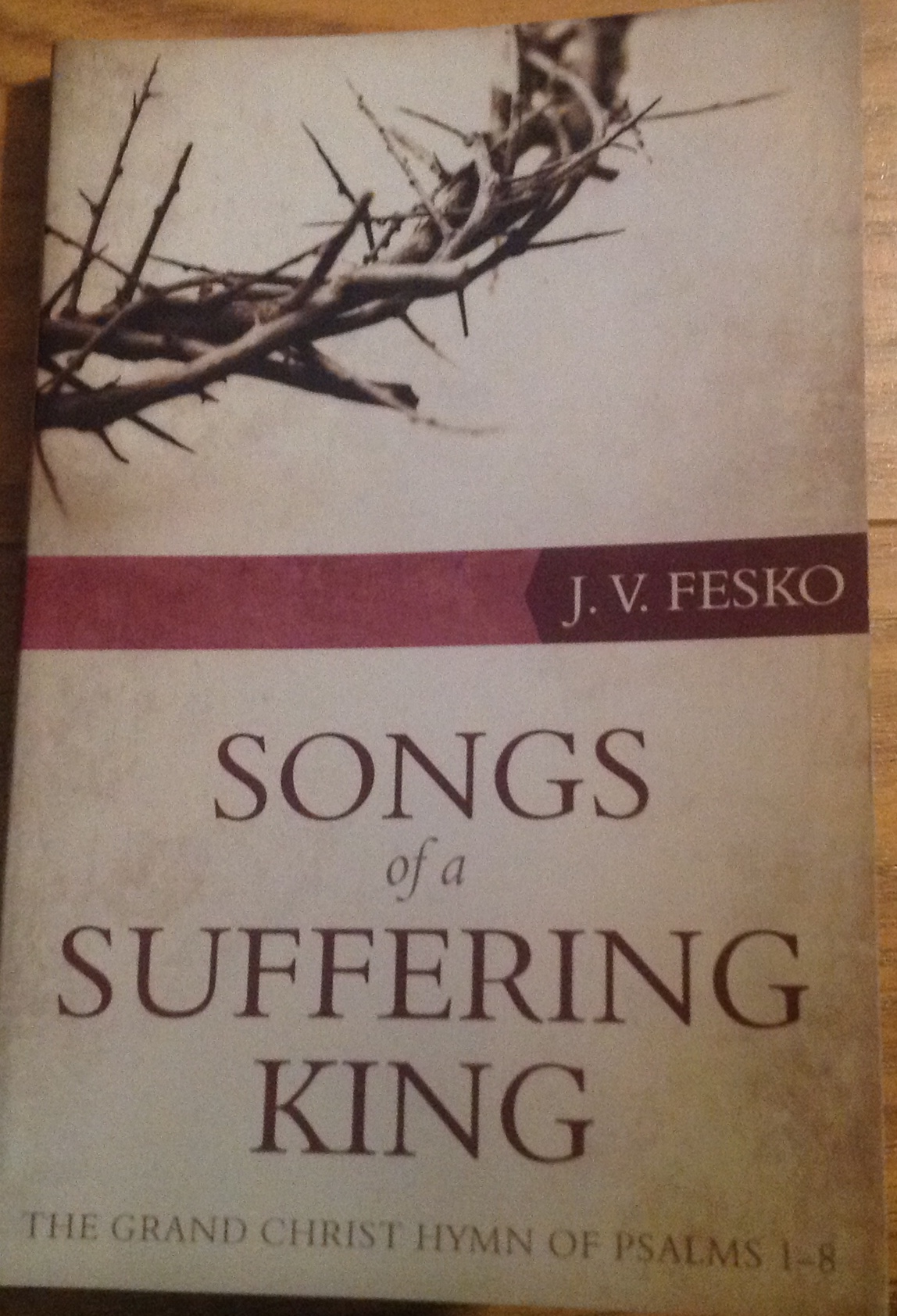
Songs Of A Suffering King by J. V. Fesko


photo (27)A good library will always include several volumes at end of the Psalms section that covers only certain psalms in a group or of a similar nature or theme–Imprecatory or praise or pilgrim psalms, etc. Perhaps you see fewer volumes on the first eight psalms discussing them as particularly united. Enter now Songs of the Suffering King by J. V. Fesko and published by Reformation Heritage Books.

Surely Mr. Fesko is right in believing that the Psalms are not in random order, and that Christ is prominent in the Psalms. In saying that the psalms are about Christ, he actually goes so far as to say that Christ is in every Psalm. To my mind, that is harder to prove in some psalms that others. Though Mr. Fesko stretched his theory here and there, this is a warm-hearted volume.

What you have is thoughtful exposition that will aid you in your own preparations, as well as serve as fine devotional reading.  He gives, for example, great insights in Psalm 1 before making it all about Christ. Even in disagreeing that Christ was there as much as he said, I left the chapter enriched. His theory worked better in Psalm 2 and his comments were outstanding there too.

Psalms 3 and 6 were my favorite of his expositions, but they were all thought provoking. Warmly Recommended!


I received this book free from the publisher. I was not required to write a positive review. The opinions I have expressed are my own. I am disclosing this in accordance with the Federal Trade Commission’s 16 CFR, Part 255.

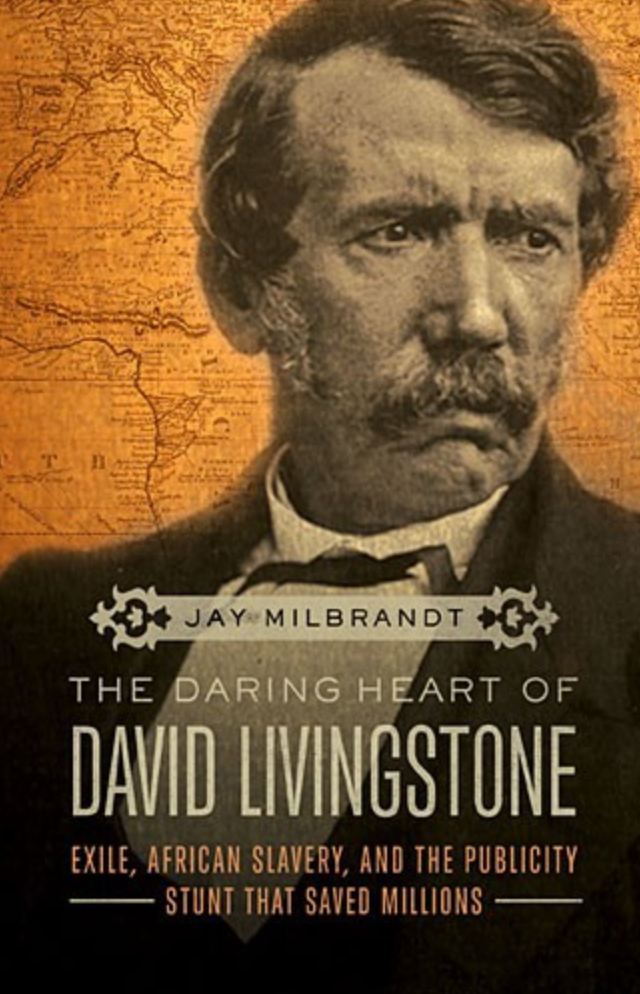
The Daring Heart of David Livingstone by Jay Milbrandt

What do you really know about David Livingstone? Would you love a volume that in giving wonderful biographical narrative emphasized one of Livingstone’s greatest, yet seldom-discussed accomplishments? How about if the volume was gripping to the point it you did not want to put down? You should, then, check out the new release The Daring Heart of David Livingstone by Jay Milbrandt and published by Thomas Nelson.

The subtitle “Exile, African Slavery, and the Publicity Stunt That Saved Millions” clues you in his angle. I must confess that at first I was a little skeptical about that angle. Livingstone was a missionary, not a political crusader, right?

Fortunately, the book was not obsessed with its angle, but only developed it naturally as it went along. What you had instead was the famous story marvelously condensed and thrilling as ever. All the big events were there woven seamlessly into the story of the man and the author’s conclusions. Mr. Milbrandt can tell a story well.

The author showed Mr. Livingstone warts and all, yet you never lost your great respect for him. He had his struggles and he felt a failure on several occasions. Results were unpleasant actually at times too. Yet, Livingstone never failed to keep pressing on.

What the author demonstrated well was that Livingstone, though he died without knowing it, was one of the main reasons the slave trade in Africa stopped. He proved too that became ever more a goal for Livingstone. He was horrified at the tragic events he witnessed in the abuse, enslavement, and,even, slaughter of Africans.

The irony of so much of Livingstone’s goals being accomplished without him knowing it, and his lonely, humble life in Africa as he became a worldwide celebrity, is a most compelling story. In my view, it is a story of God at work in our world as well.

My only complaint is the missionary work of Livingstone was rarely discussed and portrayed as a minor thing. For the man who died praying by his bed in Africa, the evidence easily proves he was a servant of the Lord.

This book is a home run, and short enough for those readers who shy away from biographies that are a little too thick. You will enjoy this book!

I received this book free from the publisher. I was not required to write a positive review. The opinions I have expressed are my own. I am disclosing this in accordance with the Federal Trade Commission’s 16 CFR, Part 255.

IMG_2101.PNG