Divine Love Theory by Adam Lloyd Johnson

Here is a fascinating look at what the author calls Divine Love Theory. On the one hand, I fully subscribe to this idea as something of the big picture of our faith. I found much here to strengthen my inclinations. On the other hand, this book is something of a technical look (point-counterpoint) at it and particularly the author’s precise theory or presentation of it. It’s still good and it reads with as much a philosophical tone as a theological one.

He will usually interact with other theories or writers to flesh out his ideas, but he is still easy to read compared to what you usually find with that style. I notice that he excels at building his argument, presenting it sequentially, and meeting all objections along the way. This approach will thrill academic types, but those outside that world might prefer something more in the popular vein. I believe Mr. Johnson could write such a work since he succeeded in communicating even in the academic style. Readers should, though, create expectations with this in mind.

Going forward, this will likely be a reference title to me. I underlined a lot of things that I can use if I encounter these issues again. I will be able to expect clear analysis in those cases with this work.

I could even feel comfortable saying the position in this book is now my own; that is, the precision and supporting details matches what I believe implicitly. There’s great competency here!

I received this book free from the publisher. I was not required to write a positive review. The opinions I have expressed are my own. I am disclosing this in accordance with the Federal Trade Commission’s 16 CFR, Part 255.
From Prisoner to Prince (NSBT) by Samuel Emadi

The NSBT never disappoints and it usually delivers that which is not really available some other convenient place. Such is this book on Joseph. The author states upfront that this book isn’t a commentary on Genesis 37-50, though I would submit it would enlighten where those commentaries might let you down.

He is trying to lay out the biblical theology of this portion of Scripture as well as tracing out how Joseph was used throughout the rest of the Bible. To be sure, the heart of the discussion is the question of its typology—is that a real thing or not. For people like me the answer is an obvious yes, but it’s still helpful to hear that championed.

The farther into this book you delve into this book its greatest strength quickly emerges—bringing the structure of Genesis to life. The design of Genesis and how the beloved story of Joseph fits into it is nothing short of exciting. Perhaps this is as it should be because biblical theology when successfully executed will deliver exactly the kind of eye opening insights Emadi delivers. There’s hardly any theological works I enjoy more than those that succeed where this one did.

Amazingly, he brings to life all of Genesis with this work on Joseph. He also shows how typology should be responsibly done and the tasty fruit it yields. This is a good one!

I received this book free from the publisher. I was not required to write a positive review. The opinions I have expressed are my own. I am disclosing this in accordance with the Federal Trade Commission’s 16 CFR, Part 255.
Christian Dogmatics by Kooi & Brink

Here’s another option for a systematic theology. To be honest, I had never heard of Cornelis van der Kooi or Gijsbert van den Brink. Still, I figured it must have some value if it was picked up by Eerdmans since a publisher would have to have some confidence to publish another volume in the crowded systematic theology field.

It turns out that these authors come from the influential Dutch Reformed theology stream. That stream gave us, among others, Bavinck. Be that as it may, this book did not seem like reading Bavinck to me. The writing style was more modern and at times the theology was too.

These authors struck me as mostly true to what I’d expect from a reformed theologian with a few modern concessions. I read some sections carefully because I’d been studying them and had a better basis of comparison. For example, their section on the Holy Spirit was unique. Not exactly how others have tackled the subject even among those on their own team. Not really unorthodox either, just emphasizing on the down beat. Where you’d expect more, you may not find it; where you expect little, you may get a basket full. Again, on the Holy Spirit check out what they had to say on the Spirit and the Word. That’s where I got my basket full while, say, on the deity or filling of the Spirit not so much.

That trend continued as I delved into other sections. Mark this down as good second-level option. It’s never going to knock the big boys off their perch, either for the public at large or for my own shelves, but from its peculiar vantage point it can give new visions of the exquisite portrait of God’s Word. The gallery is not as crowded here so you can take your time and enjoy what most of the crowd never sees. I don’t know about you, but I love to take some moments on this side of the gallery as well.

I received this book free from the publisher. I was not required to write a positive review. The opinions I have expressed are my own. I am disclosing this in accordance with the Federal Trade Commission’s 16 CFR, Part 255.
An Old Testament Theology of the Spirit of God by Wilf Hildebrandt

Why isn’t this book more well known? Rather than saying it fills a niche in the mass of books on the Holy Spirit, I’d say it fills a large hole. It covers many things that my pile of books on the Holy Spirit somehow never gets round to. Even among books specifically on the Holy Spirit in the Old Testament, it is a book that better stands back and takes in the horizon. It certainly helped me tie up some loose ends in my own thinking.

I can overview the chapters and flow of this book and you will likely go, ho-hum. It seems straightforward, but its value is not in its common layout, but the incredible things it says inside it. Chapter 1 on “spirit” or “ruah” is the best I’ve encountered. It makes sense if the nebulous. Chapters 2-5 lays out in mostly OT order the Holy Spirit in Creation, in God’s people, in leadership, and in prophecy. Most chapters take a big-picture analysis before going through the requisite biblical passages. I love the design. It’s the premise and then the proof beautifully expressed and exquisitely profound.

Chapter 6 gives a few additional insights, but the success of the book is already in your hands by then. I don’t agree with the significance of every ANE connection he finds or every scholarly strand he builds, but the synthesis that the whole of the work gives is extraordinary.

I give this one the highest recommendation!

I received this book free from the publisher. I was not required to write a positive review. The opinions I have expressed are my own. I am disclosing this in accordance with the Federal Trade Commission’s 16 CFR, Part 255.
The Ten Commandments by Peter Leithart

I knew I’d like this book. Sometimes you encounter an author that just seems to ring the bell for you each time you read them. Over the last three years, I’ve taken on 5 or 6 such writers and Peter Leithart is one of them. Where others strain to say something, he sees something. In what must induce jealousy from the cardboard writers of our day who take one catchy phrase for a title only to squeeze the life out of it for around 200 pages, along comes Leithart and says more in one page, or maybe one paragraph, than they do in their whole production. Adding injury to their insult, not only does he have something to say, but he can turn a phrase better than them in their pedestrian efforts where they think hip and cute is the real deal.

This one scores the high praise like others of his I’ve read. What’s funny is that it lacks polish. At times, it’s almost a stream-of -consciousness affair. He gives a line or two with some brilliant observation and then goes on to something else as if it wasn’t as grand as it really was. I say that though I at times strongly disagree with him (though that was far less the case here than in his work on baptism in this series). The book is kind of short too. You could read it quickly, though that would be the dumbest thing you could do. I’m not giving caveats, to be sure, as this book is beyond criticism, but really marveling at how he wrote and still how profoundly good it was.

I learned so much that either I didn’t actually know anything about the Ten Commandments in the first place, or we really have something special here.

I’ll suggest this to you—read just the material on the First Commandment alone and if you don’t love this book by then, then I for sure don’t know anything about reviewing books.

I received this book free from the publisher. I was not required to write a positive review. The opinions I have expressed are my own. I am disclosing this in accordance with the Federal Trade Commission’s 16 CFR, Part 255.
Reformed Dogmatics by Vos

It’s hard to image a new title (in English at least) from a popular writer who has been dead 70 years. But that is what we have here. Geerhardus Vos is renowned for his work on biblical theology and his highly influential “The Pauline Eschatology” and here we have uncovered for us a work from earlier in his career.

First, let’s dispense with the ridiculous criticism that some throw at the pages of this volume. Some accuse the pages of being too thin with too much bleed, but they are exactly what many Bibles use with no disadvantage. If you dislike the thinner pages, you can get this title as a multi volume set. Still, this volume is attractive and will be easy to read.

With that settled, we can now consider Vos’ work itself. Be sure to read the Preface as it gives interesting background on Vos and this work of systematic theology itself. It really prepares you for what you are going to be getting. It reminds you that he was Dutch (you may be aware of Dutch Reformed theology) and specifically his “affinity” with Herman Bavick (which may also orient you). You will also see how to distinguish it from his more famous Biblical Theology.

Next, you will notice that you are reading from one teaching students. In fact, he uses a question and answer format. Perhaps they are not all the questions that you’d like asked, but they are informative and shrewdly work through what Vos was wanting to impart. I imagine his students were far more instructed than they imagined and we likely will glean far more than the simple design might at first suggest.

Further, you might have to dig to find certain subjects. For example, when I was looking for his section on the Holy Spirit, I had to seek till I found it under the Trinity. A little digging will get you to most everything you’re looking for.

His theological prowess is on display throughout. This work is not like some of the most popular systematic theologies, but aims more at clarity and profundity. Consider it a great change up as you grab your pile of systematic theologies. It’s worthy of a place.

I received this book free from the publisher. I was not required to write a positive review. The opinions I have expressed are my own. I am disclosing this in accordance with the Federal Trade Commission’s 16 CFR, Part 255.
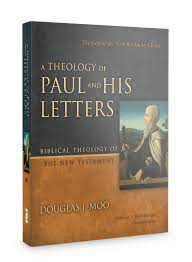
A Theology of Paul and His Letters by Douglas Moo

Every volume I’ve encountered in this Biblical Theology of the New Testament (BTNT) series has been excellent. As much, or maybe more, than the others this volume by Pauline scholar Douglas Moo shows expert handling. You wonder if there are absolutely no issues however minute that Moo doesn’t know all about involving Paul. Having written major, and I might add well received, commentaries on Romans, Galatians, Colossians, and Philemon, who could have been better positioned to write this work? As he relates in the preface, he worked on this project over 15 years. It was bound to be good and it is.

When I first picked up this volume, my thought was that it seemed to be laid out differently than the others in the series. The design appeared pedestrian and early on he relayed that he felt more comfortable in the trees than in the forest, that he enjoyed exegeting a text more than taking these big-picture views. Naturally, I lowered my expectations…until I read far enough to realize that he had misled me. The design was perfect because of the excellent work he did within it. Further, I felt he took me high enough to get a clearer forest view than I had. He knew every ditch that scholarship had run into, but he stayed on the highway. He wrote as one of whom Paul’s writings had pierced his heart after filling his head. Are we so jaded these days that we have forgotten just how much that can elevate a work like this one?

I enjoyed chapter 2 on the shape of Paul’s thought. In fact, it well illustrates what I said above. He sifted so much of the scholarly refuse to blaze a straight path to the mountain top. Along the way, you saw his honesty too. He had occasional small deviations to the normal conclusions of the bunch he runs with, but he seemed bound to tell where his studies took him. Let’s call it refreshing.

After that chapter you are better equipped to traverse his discussion of Paul’s life and ministry. After that, he takes each Pauline epistle in turn. You will feel in the hands of a master throughout. It is not a commentary, but has as much awareness as found in one.

Part 3 backs up and talks about the collective theology that you’ve already been collecting in the book to that point. Read enough to get his concept of the “New Realm”. It really unifies his entire presentation. Taking the three parts of this book together is somewhat akin to looking at Paul through a prism. Paul’s lofty contribution is key to our faith and worthy of such a grand view. This book provides such a view in a way that few ever have.

I received this book free from the publisher. I was not required to write a positive review. The opinions I have expressed are my own. I am disclosing this in accordance with the Federal Trade Commission’s 16 CFR, Part 255.
Others in the series:

https://thereaganreview.com/2017/08/19/a-theology-of-james-peter-and-jude-by-davids/

https://thereaganreview.com/2017/03/31/a-theology-of-johns-gospel-and-letters-by-kostenberger/

https://thereaganreview.com/2017/03/12/a-theology-of-marks-gospel-by-david-garland/

https://thereaganreview.com/2012/07/26/a-theology-of-luke-and-acts/

The Glory of God and Paul (NSBT) by Morgan and Peterson

Wonder what they will say? That was my first thought when I saw this title by Christopher Morgan and Robert Peterson in the NSBT series. The glory of God is a concept that you think is self-apparent, at least until you try to express it. Then circular definitions and hollow platitudes roll off your lips. To be truthful, this title upon hearing of it didn’t excite me as some in this series, but equally in truth, I am excited to think upon what it showed me. The glory of God is a subject, as shown here, that pervades Scripture and clearly must be crucial to understanding our God.

The first two chapters take you to school on the glory of God. The various ways scholars define it is brought out, not just to ascribe scholarly labels, but to reason through to real understanding. Explaining God’s glory as being both intrinsic and extrinsic was the apex for taking the reader to mastery of the subject. This section was so worthwhile and revealing.

The reason the title of the book adds “and Paul” is because in the subsequent chapters the concept of the glory of God is fleshed out in the epistles of Paul. The theology and the exegesis of specific passages seemed spot on.

The variety and quality of this series always impresses as is certainly the case here!

I received this book free from the publisher. I was not required to write a positive review. The opinions I have expressed are my own. I am disclosing this in accordance with the Federal Trade Commission’s 16 CFR, Part 255.

Now and Not Yet (NSBT) by Dean Ulrich

The NSBT series marches on with this interesting look at the significance and theology of Ezra and Nehemiah. The NSBT series is truly a random series, but the volumes are often fascinating. We never know what is coming next in the series, but we’d be remiss not to find out. Dean Ulrich does good work here.

The title Now and Not Yet suggests the track the book will run. That thought that is found in many prophetic writings here tells of a new chapter for God’s people that will more fully climax in Christ. Many are reluctant to develop that line of thinking in the scholarly world, so we appreciate the openness here to embrace it.

Throughout this book we are confronted with Ezra-Nehemiah as if it were one book rather than two. He makes a good case and at the least it does no harm to study with that design. Though I enjoyed what he gave us, I wish he had developed the structure even more.

Chapter two well explained the big picture of biblical theology. Chapter three explained the history of the return from exile but the nuggets were all in the theology developed.

In a creative turn, the next three chapters address rebuilding the temple, rebuilding the people, and rebuilding the wall. That told the story in a framework that allowed the theology to bud. Chapter 7 shows what worked and what fell short. There his now-and-not-yet theme fully bloomed.

Isn’t it wonderful that these NSBT volumes keep coming along? I want them all, don’t you? This one is a sample of why.

I received this book free from the publisher. I was not required to write a positive review. The opinions I have expressed are my own. I am disclosing this in accordance with the Federal Trade Commission’s 16 CFR, Part 255.

The Identity and Attributes of God by Terry Johnson

I must best describe this book as pure joy. I’d heard good things about it, but had been warned that it is heavily imbibed with quotations. To my mind, that usually doesn’t work. In those cases the author seems more of a compiler than a writer. I wondered going in if this would be more of a good reference than a good read. The more I read, the more my weak expectations were proven wrong.

The book is full of quotations, so how did the author pull it off? By picking the very best quotes, by seamlessly weaving them into the work, and by then writing thoughtfully around them. In the end, you get rich theology for your mind and warmth for soul. This is not a compilation. This is a book!

This book doesn’t address ever attribute, but covers some of the most important ones to ingest. After a discussion of God, the Trinity, and what the incommunicable attributes are, those of God as Creator and of His providence are brought to light. One of the best sections was holiness. Another favorite was goodness. I gained so much from it. The one on love started slower but really pierced my heart by end.

The book ends abruptly, but the author has delivered another volume on other attributes from another publisher.

You’ll see a pastor’s heart and a theologian’s precision throughout your read of this precious book. If this book doesn’t help you, I doubt you’re even trying.

I received this book free from the publisher. I was not required to write a positive review. The opinions I have expressed are my own. I am disclosing this in accordance with the Federal Trade Commission’s 16 CFR, Part 255.